


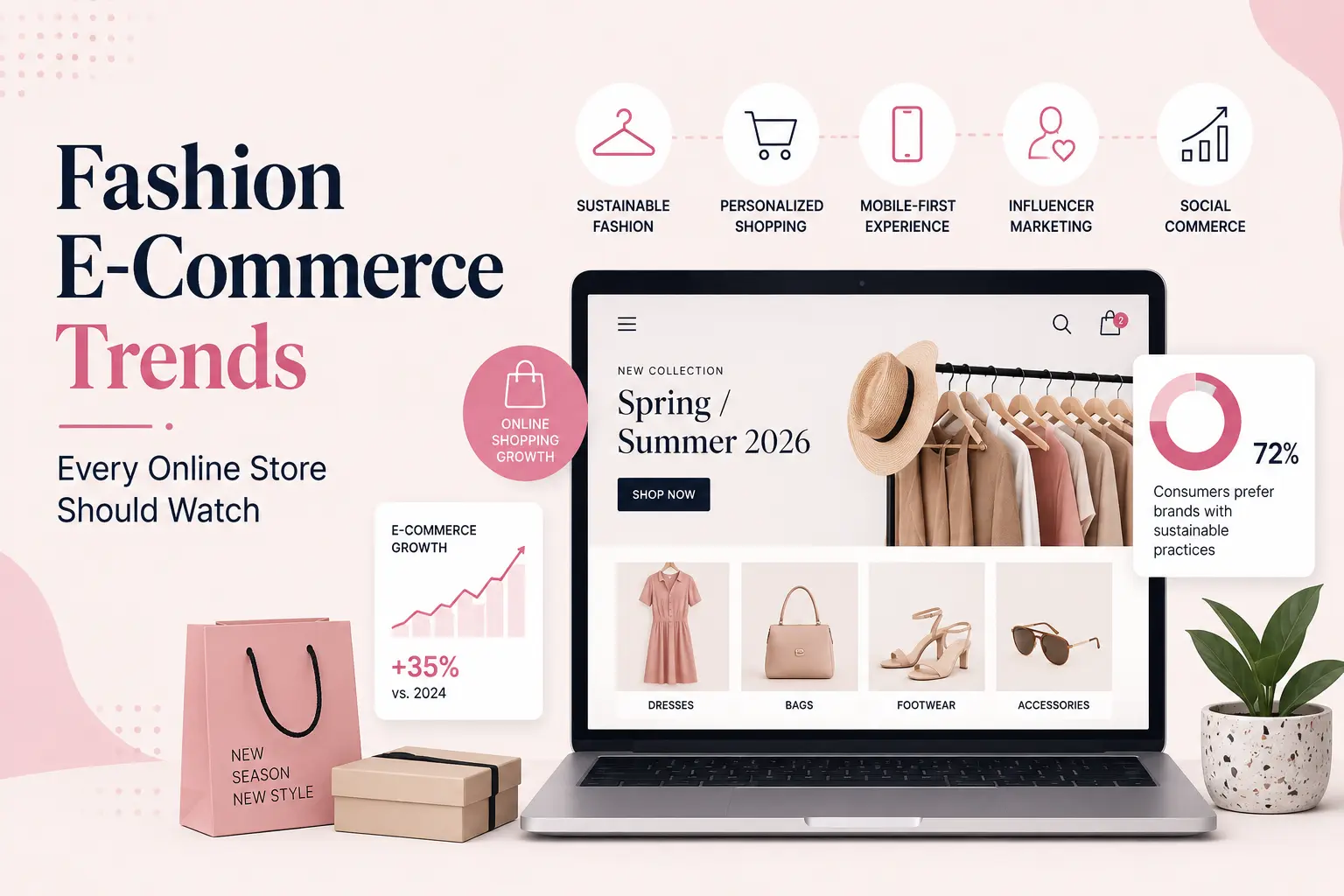
The online fashion landscape has shifted from simple product catalogs to highly personalized, AI-driven experiences. In 2026, success in fashion e-commerce is defined by how effectively a brand can blend technical convenience with the intimate, sensory-rich discovery of a private styling appointment. Consumers today expect their digital shopping environment to mirror the personalization and responsiveness of a high-end physical store, but with the added benefits of infinite discovery and instant gratification.
The Evolution of the Shopping Journey
The traditional “search-to-site” journey is being dismantled by new discovery channels. Consumers are increasingly bypassing standard search engines, choosing instead to find inspiration through social platforms, AI assistants, and community-driven content.
-
Agentic Shopping: AI assistants are evolving into sophisticated digital stylists. These agents can now analyze a shopper’s wardrobe, travel plans, and aesthetic preferences to curate collections that feel deeply bespoke, often making purchases on the user’s behalf.
-
Social-to-Checkout Compression: The time between discovering a garment on a social feed and completing the purchase has collapsed. Integrated social commerce tools allow users to buy within the apps they frequent, effectively turning every post into a potential point of sale.
-
Hyper-Personalized Interfaces: A “one-size-fits-all” homepage is becoming a relic. Modern stores now use real-time data to adapt interfaces, highlighting silhouettes, color palettes, and price points that align with an individual’s unique browsing history and style identity.
-
Digital Product Passports (DPPs): Transparency is now a competitive asset. By providing QR or NFC access to a garment’s lifecycle—from sourcing to supply chain—brands build the level of trust required to command premium pricing.
-
Immersive Visualization: Static images are no longer sufficient. Shoppers demand high-definition 360-degree views, fabric-texture close-ups, and model references that clarify exactly how a garment drapes and moves in real-world conditions.
Tactical Strategies for Driving Conversions
Turning browsers into buyers in a competitive 2026 market requires eliminating friction at every stage of the funnel. Efficiency, trust, and clarity are the primary drivers of purchase confidence.
-
Prioritize Fit Guidance: Sizing uncertainty is the primary driver of returns. Brands that provide detailed measurement charts, fit notes, and AI-powered size recommendations see significantly lower return rates and higher customer satisfaction.
-
Streamline Mobile Checkout: Mobile commerce is the dominant channel, yet it often suffers from high abandonment rates. Implementing one-tap checkout, digital wallet support, and guest-friendly flows is essential to capturing mobile-first traffic.
-
Deploy Social Proof: User-generated content is more persuasive than polished professional imagery alone. Featuring customer photos in the product gallery provides the real-world reassurance needed to overcome hesitation.
-
Adopt Flexible Payment Models: Buy Now, Pay Later (BNPL) and digital wallet integration have moved from “perks” to “table stakes.” Offering these options reduces cart abandonment and can increase the average order value.
-
Unify the Data Backend: Operational success relies on centralization. By connecting inventory, orders, and customer data into a single system, brands can ensure delivery accuracy and provide proactive, transparent shipping updates that build loyalty.
Building Resilience in the New Retail Era
Looking ahead, the fashion retailers that thrive will be those that view digitalization not as a technical hurdle, but as a core business capability. The modern consumer values brands that treat their time as a finite resource and their individuality as a priority. By investing in AI-driven discovery, prioritizing supply chain transparency, and refining the mobile experience, online stores can transform the digital storefront into a trusted advisor. This transition from being a simple product provider to a partner in personal expression is what fosters true, long-term retention.
Frequently Asked Questions
1. Is personalization still just about product recommendations? No. In 2026, personalization extends to the entire shopping interface, site search results, navigation menus, and communication style, adapting in real-time to the shopper’s preferences.
2. Why do fashion brands need to worry about “agentic commerce”?AI-powered shopping agents are becoming the primary interface for many consumers. If your product data is not rich, contextual, and accessible to these agents, your brand will effectively become invisible to a large segment of shoppers.
3. Are social media platforms really replacing official websites? They are replacing the discovery phase, not the store itself. While users find inspiration on social apps, the official website remains the hub for building long-term brand equity, managing loyalty programs, and handling complex customer data.
4. How can small brands compete with larger players on personalization? Small brands often have an advantage in agility. Focus on high-quality visual content and authentic customer communication, which are often more effective at building loyalty than expensive, complex AI implementations.
5. What is the most important “trust signal” for a fashion e-commerce site? Clarity on sizing, shipping costs, and returns. When a brand is transparent about the “fine print,” it demonstrates a commitment to the customer’s experience, which is the fastest way to build lasting trust.





Leave a Reply