


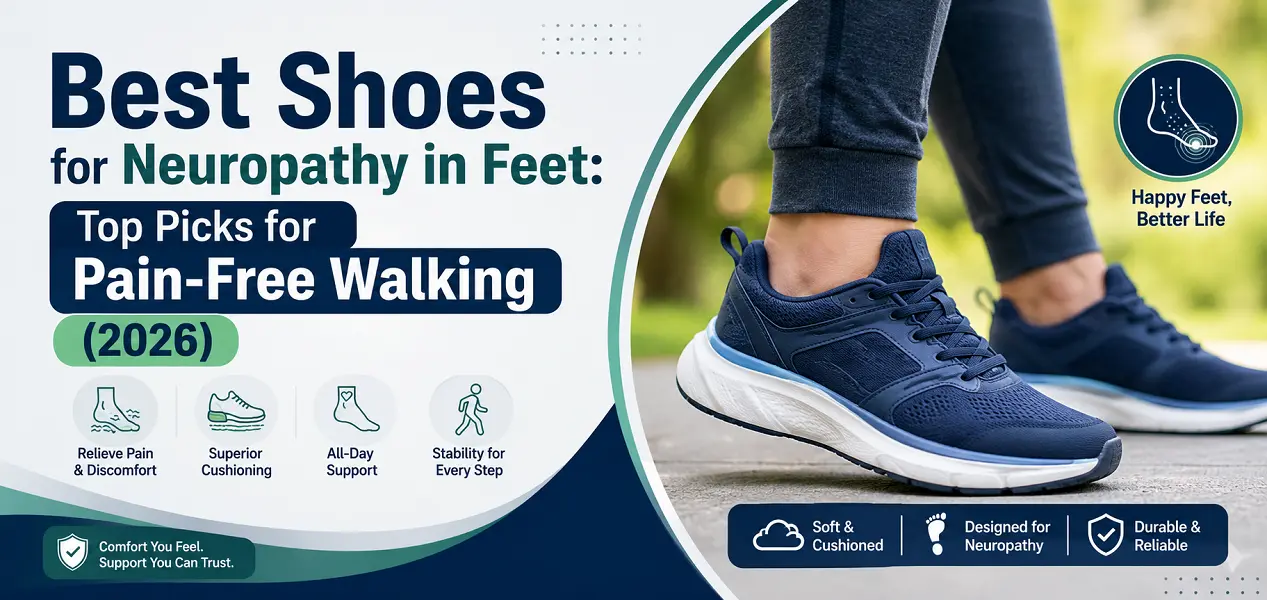
Why Your Shoe Choice Matters More Than You Think
My uncle has had diabetic neuropathy for almost nine years now. For a long time, he treated shoes the way most of us do — grab whatever’s on sale, as long as it fits well enough. Then came a small blister on his heel that he didn’t even feel forming. Two weeks later, that “small blister” turned into an infected wound that needed a specialist. That’s when the family finally understood something podiatrists have been saying for years: with neuropathy, the shoe isn’t a style choice. It’s part of your daily care routine.
If you’re here searching for the best shoes for neuropathy in feet, chances are you already know the basics — numbness, tingling, burning, or that odd feeling of walking on cotton wool. What you actually need is a straight answer on what to buy, why it works, and what to avoid. So let’s get into it without the fluff.
The Quick Answer (For Those in a Hurry)
If you only remember three things from this article, make it these:
- Go for shoes with a wide, deep toe box — cramped shoes cause pressure points you may not even feel.
- Prioritize seamless interiors and soft, breathable uppers to avoid rubbing and blisters.
- Choose rocker-bottom or cushioned soles that reduce pressure on the ball of the foot with every step.
Brands like New Balance (990 and 928 series), Orthofeet, Propet, and Skechers Arch Fit consistently show up in podiatrist recommendations — not because they’re trendy, but because their construction actually respects how neuropathic feet behave.
What Makes a Shoe “Neuropathy-Friendly” Anyway?
Here’s the thing nobody explains clearly enough: neuropathy doesn’t just numb your feet, it changes how your whole foot mechanics work. You might not notice a rock in your shoe. You might not feel a seam digging into your skin until it’s already caused damage. So the shoe has to do the sensing job your nerves can’t.
A genuinely good pair checks off these boxes:
1. Wide and Deep Toe Box
Toes need room to spread naturally. A narrow toe box squeezes nerves and blood vessels, which is exactly what you don’t want if circulation is already compromised (common with diabetic neuropathy).
2. Seamless or Minimal-Seam Interior
Internal seams are a silent troublemaker. They rub against skin for hours, and because you can’t feel the friction building up, a sore can develop before you notice anything’s wrong.
3. Non-Binding, Adjustable Closures
Velcro straps or wide laces let you adjust fit as your feet swell throughout the day — something regular lace-up shoes don’t accommodate well.
4. Cushioned, Shock-Absorbing Soles
Extra padding under the ball and heel reduces the pressure points where ulcers most often form.
5. Firm Heel Counter
This keeps your foot stable and prevents rolling, which matters a lot if numbness has thrown off your balance (a very common neuropathy complaint).
Best Shoes for Neuropathy — By Category
Not everyone needs the same shoe. A retired teacher walking two miles every morning has different needs than someone standing all day at a warehouse job. Here’s how I’d break it down.
Best Walking Shoes for Neuropathy
New Balance 928v3 — This one shows up on more podiatrist-approved lists than almost any other shoe, and for good reason. It has a roomy toe box, firm heel support, and a rocker sole that reduces pressure while walking. It’s not the most stylish shoe you’ll own, but comfort wins here.
Best Shoes for Diabetics with Neuropathy
Orthofeet Coral Stretch Knit — Seam-free interior, extra depth for custom orthotics, and a stretchable knit upper that moves with foot swelling instead of fighting it. Many diabetic patients specifically get shoes like this covered under Medicare’s therapeutic shoe benefit — worth asking your doctor about.
Best Shoes for Neuropathy Women
Propet TravelWalker II — Lightweight, wide-fit options, and a design that doesn’t scream “orthopedic shoe.” A lot of women avoid medical-grade footwear purely because it looks clinical; this one manages to look closer to a regular sneaker while keeping the protective features intact.
Best Men’s Shoes for Neuropathy
Skechers Arch Fit — Built-in arch support plus a memory-foam footbed. It’s more affordable than most specialty diabetic shoe brands, which matters since neuropathy patients often need to replace shoes more frequently than average.
Best for Standing All Day
Brooks Addiction Walker — If your job keeps you on your feet for eight-plus hours, this is the one physical therapists tend to recommend. Motion control plus serious cushioning.
A Word on Price vs. Value
I’ll be honest — some of the “medical-grade” neuropathy shoe brands are expensive, sometimes $120 to $180 a pair. That’s a real barrier for a lot of people, and I’m not going to pretend it isn’t. But here’s the trade-off worth considering: a $40 pair of unsupportive shoes that causes a foot ulcer can end up costing far more in medical bills, lost work days, and worse — in severe cases, amputation risk. It’s not about buying the priciest option; it’s about not cutting corners on the specific features listed above.
If budget is tight, look at Skechers or Propet lines first — they hit most of the important features without the premium “orthopedic” price tag.
What These Shoes Won’t Do
I want to be upfront here: no shoe cures neuropathy or reverses nerve damage. What a good shoe does is reduce your risk of injury, pressure sores, and falls — it manages a symptom, not the underlying condition. If you’re dealing with worsening numbness, open sores, or changes in foot color or temperature, that’s a conversation for your doctor or podiatrist, not something a shoe upgrade fixes on its own.
How to Actually Try Shoes On (Most People Skip This)
- Shop later in the day, when feet are naturally more swollen — this gives you a truer fit.
- Wear the socks you’d normally wear with the shoes.
- Check for pressure spots by walking around the store for a few minutes, not just standing still.
- If you can’t feel discomfort due to numbness, ask someone to check your feet after wearing new shoes for the first hour, to catch red marks before they become blisters.
Final Thoughts
Finding the best shoes for neuropathy in feet isn’t about chasing a brand name — it’s about matching specific features (wide toe box, seamless interior, good cushioning, adjustable fit) to how your feet actually behave day to day. Try a few pairs, don’t rush the decision, and if you have diabetes, loop in your doctor since some shoes may even be partially covered by insurance.
Frequently Asked Questions
1. What are the best shoes for neuropathy?
Shoes with a wide toe box, seamless interior, cushioned soles, and adjustable closures work best. New Balance, Orthofeet, and Propet are commonly recommended by podiatrists.
2. What are the best shoes for foot neuropathy specifically caused by diabetes?
Look for diabetic-certified shoes like Orthofeet or Dr. Comfort — many are Medicare-eligible and designed with extra depth for custom insoles.
3. What are the best shoes for men with neuropathy?
Skechers Arch Fit and New Balance 928v3 are popular choices for men, offering arch support and a firm, stable heel.
4. Can regular sneakers work for neuropathy, or do I need special medical shoes?
Some regular sneakers with removable insoles and wide fits can work, but they usually lack seamless interiors and depth for orthotics — features specialty shoes prioritize.
5. How often should I replace neuropathy shoes?
Roughly every 6-8 months, or sooner if the cushioning feels flattened, since worn-out padding stops protecting pressure points.
6. Are compression socks necessary along with neuropathy shoes?
Not always — check with your doctor first, since compression isn’t recommended for everyone with neuropathy, especially those with certain circulation issues.
7. Do neuropathy shoes need to be ugly or clinical-looking?
Not anymore. Brands like Propet and Vionic now design neuropathy-friendly shoes that look closer to standard sneakers or casual shoes.
8. What’s the best shoe width for neuropathy?
Wide (2E) or extra-wide (4E) is usually recommended, though it depends on individual foot shape and swelling patterns.
9. Can insoles alone fix an unsupportive shoe?
Insoles help, but they can’t compensate for a narrow toe box or internal seams that cause friction — the shoe itself still matters.
10. Are walking shoes and running shoes the same for neuropathy purposes?
Not quite. Walking shoes for neuropathy usually prioritize stability and cushioning over the lightweight, high-impact design of running shoes.
11. What are the best shoes for neuropathy women can wear to work?
Vionic and Propet both make closed-toe, low-heel options that pass as work-appropriate while keeping the necessary support features.
12. Does Medicare cover neuropathy shoes?
For diabetic neuropathy patients, Medicare Part B may cover one pair of therapeutic shoes per year, plus inserts, if prescribed by a doctor.
13. What’s the biggest mistake people make when buying neuropathy shoes?
Buying based on how the shoe looks or feels while standing still, instead of checking fit after walking and factoring in foot swelling later in the day.
14. Can kids or younger adults have neuropathy that needs special shoes?
Yes, neuropathy isn’t only age-related — chemotherapy, certain infections, or genetic conditions can cause it in younger people too, and the same shoe principles apply.
15. Should I see a podiatrist before buying neuropathy shoes?
If you have diabetes or any diagnosed nerve damage, yes — a podiatrist can check for pressure points and may write a prescription that makes shoes insurance-eligible.










Leave a Reply