


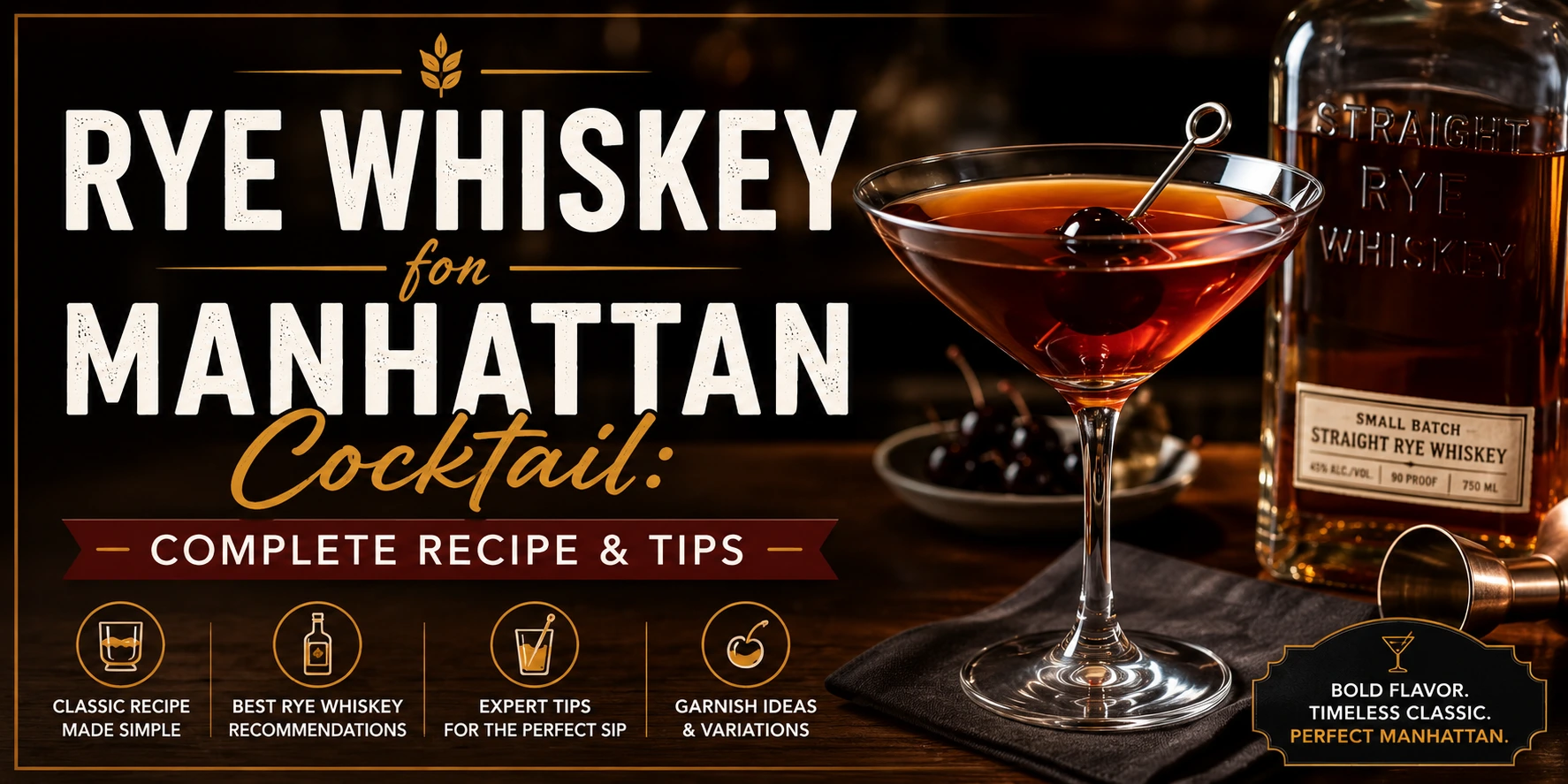
The first time I made a Manhattan with bourbon instead of rye, a bartender friend of mine took one sip, made a face, and said, “This tastes like a sweet syrup with a whiskey aftertaste.” He wasn’t wrong. Swap in a good rye whiskey and the same three ingredients suddenly taste like a completely different drink — drier, spicier, and honestly, more grown-up.
If you’ve been wondering why so many recipes insist on rye whiskey for Manhattan cocktail builds, this is the answer: rye’s peppery bite cuts through the sweet vermouth in a way bourbon just can’t match. This guide covers the best rye whiskey for Manhattan cocktail options, the actual recipe, and the small mistakes that quietly ruin most home versions.
Why Rye Whiskey and Not Bourbon?
Bourbon has to be at least 51% corn, which gives it that rounded, sweet, almost caramel character. Rye whiskey has to be at least 51% rye grain, and rye brings spice — think black pepper, clove, a bit of dill even. When you mix either one with sweet vermouth and bitters, the corn in bourbon tends to pile sweetness on top of sweetness. Rye pushes back against it instead.
That’s not to say bourbon Manhattans are wrong. Plenty of classic bars serve them, and some people genuinely prefer the softer profile. But if you’re asking which spirit the original 1880s recipe called for, it was rye — bourbon became common later, mostly because rye whiskey nearly disappeared during and after Prohibition.
What to Look for in a Rye for Your Manhattan
Not every rye works well here. A few things I’ve learned through a lot of trial and error (and a few forgettable cocktails):
- Proof matters more than you’d think. Anything under 90 proof tends to get lost once vermouth and bitters go in. I’d stick to 90-100 proof for a Manhattan specifically.
- High-rye-content bottles shine. Some ryes are barely over the legal 51% minimum; others push past 90%. The higher the rye content, generally the spicier and more assertive the drink.
- Age helps, but isn’t everything. A 4-6 year rye usually has enough barrel influence to round out the spice without dulling it.
- Skip the ultra-premium bottle for mixing. This one’s a personal opinion, but I wouldn’t pour a $150 rye into a cocktail with vermouth and bitters. Save that for sipping neat.
Best Rye Whiskey for Manhattan Cocktail — My Actual Picks
| Rye Whiskey | Proof | Why It Works | Price Range |
|---|---|---|---|
| Rittenhouse Rye 100 | 100 | Bartender favorite, great value, bold spice | $22-28 |
| Old Overholt | 80 | Budget-friendly, classic profile, slightly softer | $16-20 |
| Sazerac Rye | 90 | Balanced spice and sweetness, widely available | $25-30 |
| Wild Turkey 101 Rye | 101 | Big, bold, holds up well against strong vermouth | $28-35 |
| High West Double Rye | 92 | Layered spice from two rye mash bills | $35-40 |
| Bulleit Rye | 95 | High rye content (95%), sharp and peppery | $25-30 |
Rittenhouse is what most professional bartenders reach for, and honestly, it’s what I keep at home too. It’s not fancy, but it does exactly what a Manhattan needs it to do.
The Actual Manhattan Recipe
Here’s the classic 2:1 ratio that most bars use, along with a slightly sweeter home version if you want it.
Classic Manhattan (per drink):
- 2 oz rye whiskey
- 1 oz sweet vermouth (Carpano Antica or Dolin Rouge are both solid)
- 2-3 dashes Angostura bitters
- Garnish: brandied cherry (skip the neon-red maraschino ones if you can — the difference is noticeable)
Steps:
- Fill a mixing glass with ice.
- Add the rye, vermouth, and bitters.
- Stir — don’t shake — for about 30 seconds. Stirring keeps the drink clear and silky instead of cloudy and diluted.
- Strain into a chilled coupe or martini glass.
- Garnish with a cherry, or an orange peel if you want something less sweet.
A quick tip that took me embarrassingly long to figure out: chill your glass first. Stick it in the freezer for five minutes before you start mixing. A warm glass melts your ice faster mid-stir, and you end up with a watered-down drink before you’ve even taken a sip.
Common Mistakes People Make
Most bad Manhattans aren’t the whiskey’s fault. They’re usually one of these:
Using old vermouth. Vermouth is wine-based, and once opened, it starts going flat within a few weeks even in the fridge. If your vermouth smells more like vinegar than fruit, replace it. This one mistake ruins more Manhattans than a cheap whiskey ever could.
Shaking instead of stirring. Shaking introduces air bubbles and ice shards, giving the drink a cloudy look and a slightly different texture. It’s not “wrong” exactly, but it’s not how a Manhattan is traditionally made, and the texture really does change.
Skipping the bitters. Bitters aren’t optional decoration — they tie the sweetness of the vermouth to the spice of the rye. Without them, the drink tastes flat and one-note.
Over-diluting. Thirty seconds of stirring is usually enough. Longer than that and you’re just melting ice into your drink.
Rye vs. Bourbon vs. Rittenhouse-style Rye — Quick Comparison
| Factor | Rye Whiskey | Bourbon |
|---|---|---|
| Base grain | 51%+ rye | 51%+ corn |
| Flavor profile | Spicy, peppery, dry | Sweet, caramel, rounded |
| Manhattan result | Balanced, complex | Sweeter, softer |
| Historical accuracy | Original recipe | Later substitute |
If you genuinely dislike spicy or dry flavors, a bourbon Manhattan isn’t a crime. But if you want the drink that bartenders and cocktail historians consider the “real” Manhattan, rye is the way to go.
A Few Variations Worth Trying
- Perfect Manhattan: Split the vermouth — half sweet, half dry — for a less sugary, more balanced drink.
- Black Manhattan: Swap sweet vermouth for Averna or another amaro. Bitter, boozy, not for everyone, but worth trying once.
- Rob Roy: Technically a different drink, but it’s a Manhattan made with Scotch instead of rye — useful if you want to see how much the base spirit really changes things.
Final Thoughts
There’s no single “correct” rye whiskey for Manhattan cocktail recipes — it comes down to how spicy or bold you want the drink to taste. If you’re just starting out, Rittenhouse Rye 100 is close to foolproof and won’t break the bank. Once you’ve got the basic recipe down, experimenting with different ryes is honestly one of the more enjoyable ways to figure out your own preferences. Just don’t skip good vermouth to save a few dollars — it matters more than most people expect.
Frequently Asked Questions
1. What is the best rye whiskey for a Manhattan cocktail?
Rittenhouse Rye 100 is widely considered the best value option, but Sazerac Rye and Wild Turkey 101 Rye are also excellent choices depending on how bold you want the spice level.
2. Can I use bourbon instead of rye whiskey in a Manhattan?
Yes, it’s a common substitution and tastes sweeter and softer. It’s just not the traditional version of the drink.
3. What proof rye whiskey works best for Manhattans?
Something between 90 and 100 proof usually holds up best against the vermouth and bitters without getting lost.
4. Do I need expensive rye whiskey to make a good Manhattan?
No. A mid-range bottle (around $20-30) usually works better in a mixed drink than an expensive sipping whiskey.
5. What vermouth pairs best with rye whiskey in a Manhattan?
Carpano Antica Formula and Dolin Rouge are both popular choices that balance well with rye’s spice.
6. Should a Manhattan be shaken or stirred?
Stirred. Shaking adds unwanted air and ice chips, changing the texture of the drink.
7. What bitters go into a classic Manhattan?
Angostura bitters are the standard, though some people like adding a dash of orange bitters for extra complexity.
8. How long should you stir a Manhattan?
About 30 seconds is enough to properly chill and dilute the drink without over-watering it.
9. What’s the ideal ratio of whiskey to vermouth in a Manhattan?
The classic ratio is 2:1, meaning 2 ounces of rye whiskey to 1 ounce of sweet vermouth.
10. What garnish is traditional for a Manhattan?
A brandied or Luxardo cherry is the classic choice, though an orange peel works well too.
11. Why does my Manhattan taste too sweet?
It’s often the vermouth-to-whiskey ratio or old vermouth. Try the Perfect Manhattan variation with half dry, half sweet vermouth.
12. Is Manhattan a strong cocktail?
Yes, it’s a spirit-forward drink with minimal dilution, so it’s stronger than drinks like a whiskey sour or highball.
13. Can I make a Manhattan in advance for a party?
You can pre-batch the whiskey and vermouth mixture and refrigerate it, but add ice and stir individually right before serving.
14. What’s the difference between a Manhattan and an Old Fashioned?
An Old Fashioned uses sugar and whiskey with bitters and no vermouth, while a Manhattan relies on sweet vermouth for its sweetness and complexity.
15. Does rye whiskey go bad once opened?
No, whiskey doesn’t spoil like wine-based vermouth. An opened bottle stays good for years if stored properly, away from direct sunlight.









Leave a Reply