


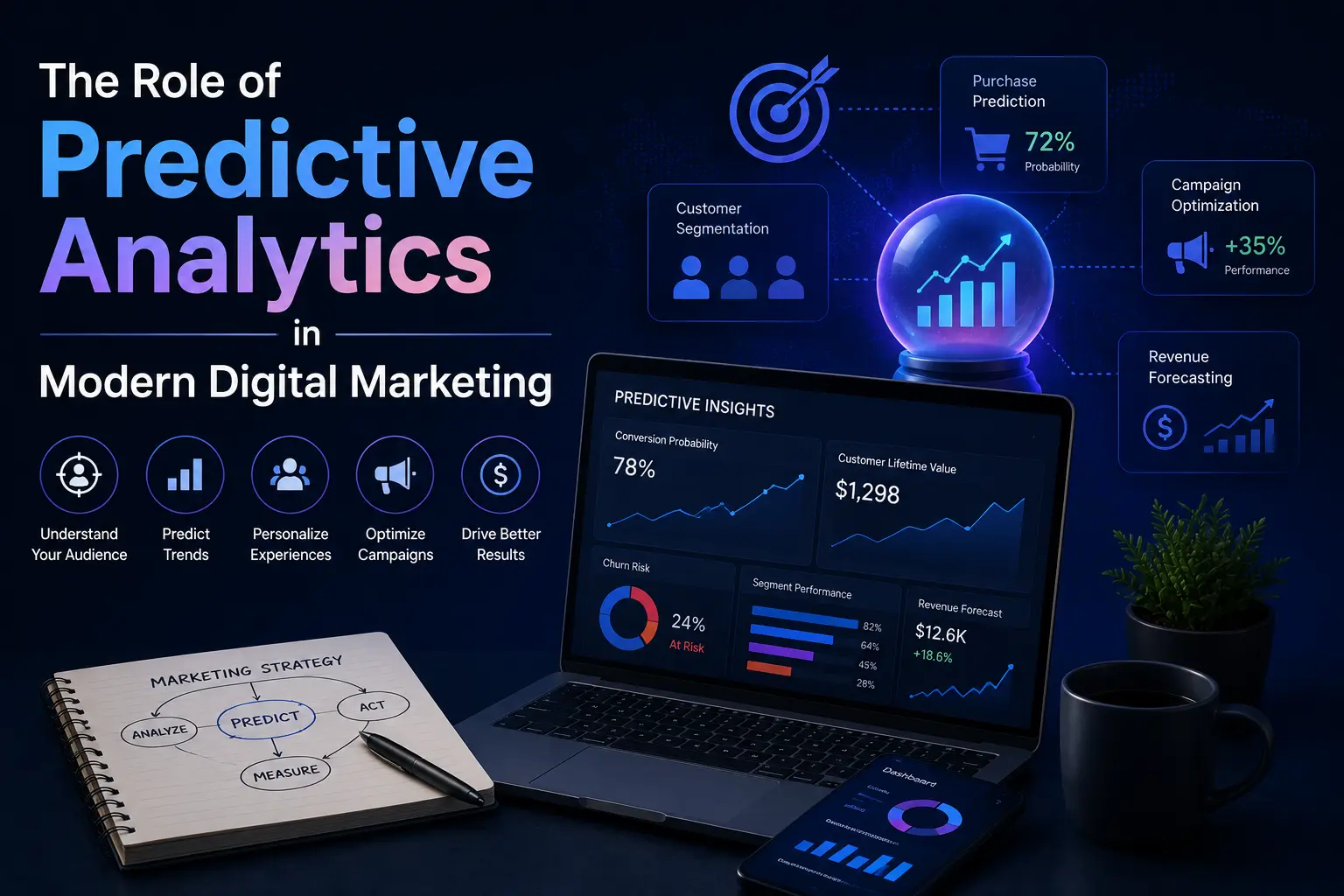
Predictive analytics uses historical data, statistical algorithms, and machine learning to identify the likelihood of future outcomes. In digital marketing, this shifts the strategy from reactive to proactive, allowing teams to anticipate customer needs before they are explicitly stated. By processing patterns in behavior, businesses can allocate budgets with greater precision and deliver highly personalized experiences.
Leveraging Data for Strategic Forecasting
The power of predictive analytics lies in its ability to parse massive datasets to uncover hidden trends. When marketers understand these patterns, they stop guessing which campaigns will perform well and start relying on probability-based insights. This reduces wasted ad spend and focuses resources on the channels and tactics with the highest return on investment.
-
Customer Lifetime Value (CLV) Prediction: Identify which prospects are likely to become high-value, long-term customers, allowing for more aggressive acquisition spending on those specific segments.
-
Churn Mitigation: Spot early indicators of customer dissatisfaction—such as changes in login frequency or interaction patterns—to trigger automated retention workflows before the customer leaves.
-
Optimal Timing: Determine the exact moments when your audience is most receptive to messaging, ensuring your emails or advertisements arrive when conversion probability is at its peak.
-
Product Recommendation Engines: Analyze past purchase history and browsing behavior to suggest items that individual customers are statistically most likely to buy next.
-
Budget Optimization: Distribute advertising funds dynamically across campaigns based on which ones are trending toward better performance, rather than setting rigid, static budgets.
Implementing a Predictive Workflow
Transitioning to a predictive model requires a structured approach to data collection and processing. Follow these steps to integrate these insights into your marketing operations effectively.
-
Consolidate Data Sources: Break down internal silos to ensure your analytics engine has access to information from your CRM, website behavior logs, social media engagement, and point-of-sale systems.
-
Define Clear Objectives: Start with a specific problem, such as reducing lead abandonment or increasing the cross-sell rate, rather than attempting to predict every aspect of the customer journey at once.
-
Choose the Right Tools: Utilize platforms that offer native predictive capabilities or integrate with your existing marketing stack to automate the data-crunching process.
-
Validate Predictive Models: Run small-scale tests to compare the model’s predictions against actual results, refining the algorithm until it reaches a reliable level of accuracy.
-
Translate Insights into Action: Build automated triggers where the insights gathered by your predictive engine automatically adjust your live marketing campaigns without manual intervention.
Driving Competitive Advantage through Foresight
Market competition rewards those who adapt quickly. Predictive analytics provides a sustainable advantage by allowing firms to pivot their messaging and product focus in real-time. This capability is particularly vital in saturated markets where small improvements in targeting can lead to significant gains in market share. By focusing on what a customer is likely to do next, you create a more relevant, helpful experience that naturally fosters brand loyalty. This deeper understanding of the customer lifecycle ensures that every marketing dollar spent is aligned with verifiable growth potential, ultimately turning data from a storage burden into a primary strategic asset.
Conclusion
Predictive analytics changes the marketing game from a series of educated guesses to a disciplined, data-backed science. By anticipating future behaviors, you can tailor your approach to provide exactly what your customers need, exactly when they need it. Adopting these technologies is essential for any business looking to remain agile and effective in a fast-paced market environment.
Frequently Asked Questions
1. Is predictive analytics only for large enterprises? No, scalable tools and cloud-based platforms now make predictive modeling accessible to small and mid-sized businesses, provided they have a clean, organized data foundation.
2. How much data do I need to start using predictive analytics? Quality is more important than quantity. While more data improves model accuracy, starting with consistent, clean records of customer interactions over several months is sufficient to identify basic trends.
3. Will predictive analytics replace human marketers? No. Analytics provide the “what” and the “when,” but human marketers are still required to provide the “why,” the creative strategy, and the emotional resonance that drives brand connection.
4. What is the difference between descriptive and predictive analytics? Descriptive analytics explains what has already happened, while predictive analytics uses that history to provide a high-confidence estimate of what is likely to happen next.
5. How do I protect customer privacy when using predictive tools? Focus on using first-party data that customers have explicitly provided, and always maintain strict compliance with data protection regulations by ensuring data is anonymized and securely processed.





Leave a Reply