


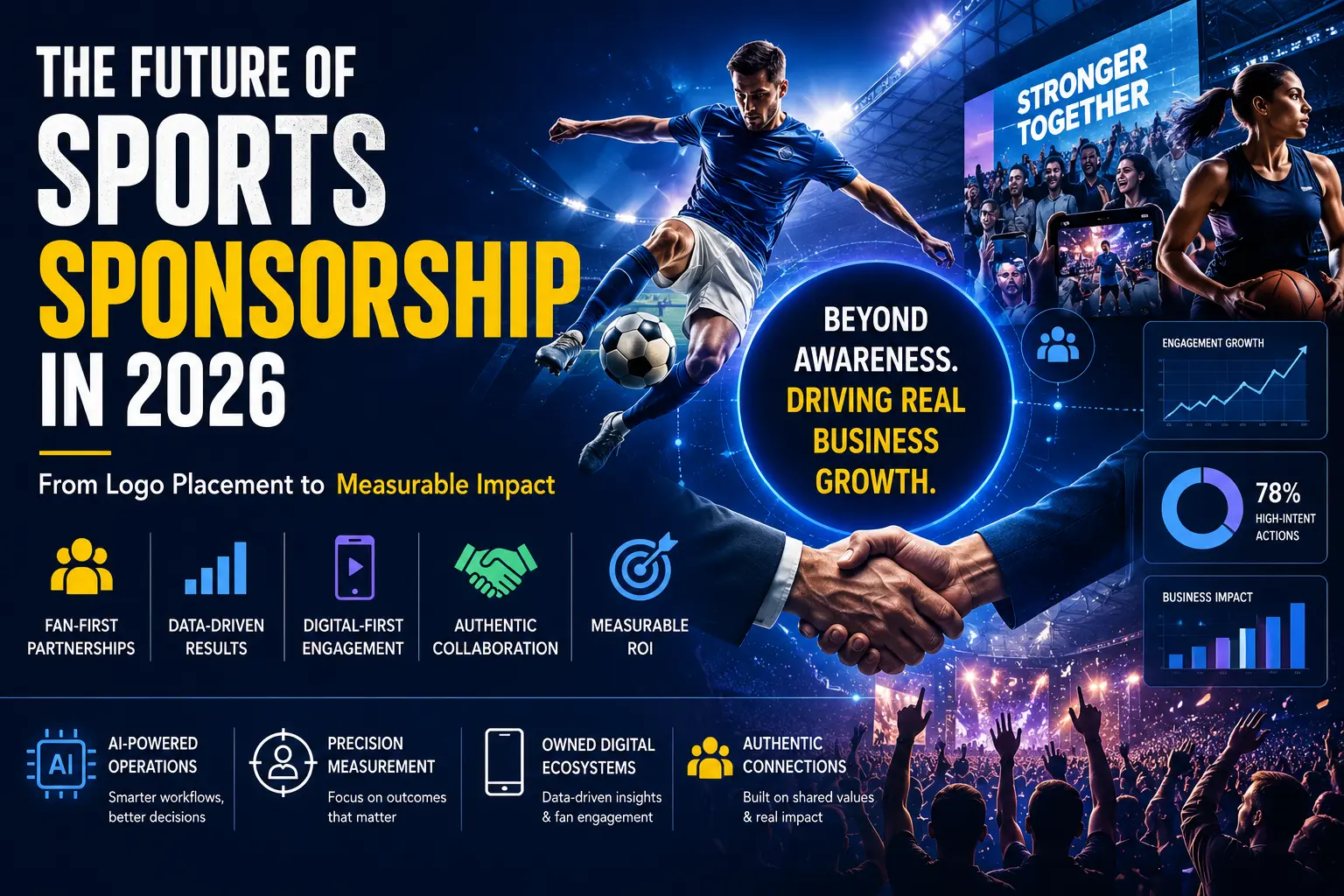
Sports sponsorship is evolving from a simple branding exercise into a sophisticated, data-driven business strategy. In 2026, the industry is moving away from passive logo placement toward active, integrated partnerships that prioritize measurable results, fan community alignment, and digital storytelling. For brands, the shift represents a massive opportunity to move beyond mere awareness and drive verifiable commercial impact.
Key Shifts Redefining Sports Partnerships
The modern sponsorship landscape is no longer limited to the stadium or the duration of a live match. Instead, successful partnerships are now “always-on” ecosystems that intersect with lifestyle, culture, and digital habits.
-
Platform-First Activation: Sponsorships are now used as platforms for multi-channel engagement. Leading brands are blending influencer partnerships, social media content, and physical assets to ensure their presence is felt across the entire fan journey, not just during game day.
-
The “Hyperreality” Effect: Digital entertainment and real-world fandom are collapsing into one. Brands are increasingly sponsoring interactive content, docuseries, and AI-driven “storyworlds” that build deep emotional connections with fans long before they ever watch a live match.
-
Precision Measurement: Chief Marketing Officers are demanding sophisticated ROI. Brands are shifting away from vanity metrics like total impressions to focus on “high-intent” behaviors, such as app downloads, ticket purchases, and direct customer acquisition.
-
Non-Traditional Entrants: Companies outside the traditional Fortune 500 sponsorship mix—including those in beauty, fashion, and emerging tech—are entering the space. These brands target new, diverse fan coalitions, particularly female audiences and younger demographics who care more about brand values than traditional category exclusivity.
-
Native Integration: Audiences are becoming more tech-savvy and intolerant of “lazy” advertising. Activations that provide genuine utility, exclusive access, or entertainment value—and feel native to the fan experience—are the ones that secure loyalty.
Operational Changes for Modern Sponsors
To succeed in this faster, louder arena, brands and properties must treat sponsorship as a scalable business function. The internal workflows behind these deals are undergoing a professionalization phase as critical as the marketing itself.
-
Separate Sponsorship from Partnership: Properties are increasingly distinguishing between transactional “media-style” sponsorships (focused on exposure) and strategic partnerships (focused on long-term business development and community alignment).
-
Leverage AI Operations: Artificial intelligence is being deployed to handle administrative friction, including prospect research, asset tracking, and real-time reporting. This allows human teams to focus on the essential “relationship” side of the business.
-
Establish Early Benchmarks: For new entrants or custom deals, long-term success is now gated by early performance milestones. Explicit benchmarks in the first quarter of a deal help teams optimize strategy before the cycle closes.
-
Invest in Owned Digital Ecosystems: Brands are moving fans toward owned apps and platforms to track high-intent behavior. This data provides the clarity needed to prove the effectiveness of a campaign and tailor future messaging to specific user segments.
-
Cultivate Authenticity: Fans quickly identify and reject “interloper” brands. Successful sponsors now spend time listening to fan communities and adopting their language and values before launching large-scale commercial activations.
Driving Impact in a Fragmented Arena
As attention for sports remains abundant but intent becomes more fragmented, consistency is the key differentiator. Successful brands act as genuine supporters of the community they enter, whether by funding social causes or providing fans with exclusive, gamified experiences. By focusing on deep, relationship-based programs rather than quick-hit exposure, brands can turn one-time sponsorship into long-term commercial growth. This evolution requires a disciplined approach to data and a creative commitment to delivering real value to the fan, ultimately turning the sponsorship from a cost center into a primary driver of brand equity.
Frequently Asked Questions
1. Is it still worth investing in sports sponsorship for brand awareness?Awareness is still a factor, but it is no longer enough. Brands are now expected to drive measurable business outcomes, such as customer acquisition or app engagement, alongside their broader branding goals.
2. How is AI changing the day-to-day of sports sponsorship?AI is being used to streamline operations, such as faster reporting through natural language queries, automated asset tracking, and discovering new prospect leads, which allows teams to spend more time on strategy.
3. Why are non-traditional brands, like fashion, entering sports sponsorship? This is driven by a demographic shift. New fan bases, particularly women and Gen Z, are interested in the lifestyle, style, and culture surrounding sports, opening the door for brands that speak directly to those interests.
4. What is the difference between a “sponsorship” and a “partnership” in 2026?Sponsorship is increasingly viewed as a transactional media buy for exposure. A partnership is a deeper, long-term strategic relationship focused on community alignment, business development, and brand storytelling.
5. How do I measure success if the fan experience is spread across so many channels? Success is now measured by connecting fan engagement metrics to business outcomes. Brands are focusing on driving fans toward owned platforms—like dedicated apps—where high-intent behavior like dwell time and participation can be accurately tracked.




Leave a Reply