Compact residential lifts are becoming an increasingly popular addition to modern Indian homes, especially where space is limited. As homeowners look for convenient ways to access multiple floors, installing a compact home lift offers a practical alternative to traditional staircases. Whether you live in a duplex, independent house, villa or a multi-storey home, a space-saving residential lift can improve accessibility, comfort and everyday convenience.
Unlike conventional passenger elevators, modern compact home lifts are designed specifically for residential environments. They require less installation space, offer flexible placement options and are available in different designs to complement modern home interiors.
Among the available options, pneumatic vacuum home lifts are gaining attention because they feature a self-supporting structure and generally do not require a conventional lift shaft, deep pit or separate machine room.
In this guide, we explore the best compact residential lift options for small homes in India, their features, benefits, installation requirements and factors to consider before choosing one.
Why Are Compact Residential Lifts Ideal for Small Homes?
Space is one of the biggest challenges when planning a lift installation in a small house. Traditional elevators often require dedicated shafts, machine rooms and significant structural modifications. These requirements can make installation difficult in existing residential properties.
Compact residential lifts address these challenges by offering space-efficient designs that suit different home layouts.
Here are some reasons why homeowners consider compact lifts:
- Space-saving design: Compact lifts are designed to occupy less floor space than conventional elevators.
- Convenient accessibility: They provide comfortable movement between floors without depending entirely on staircases.
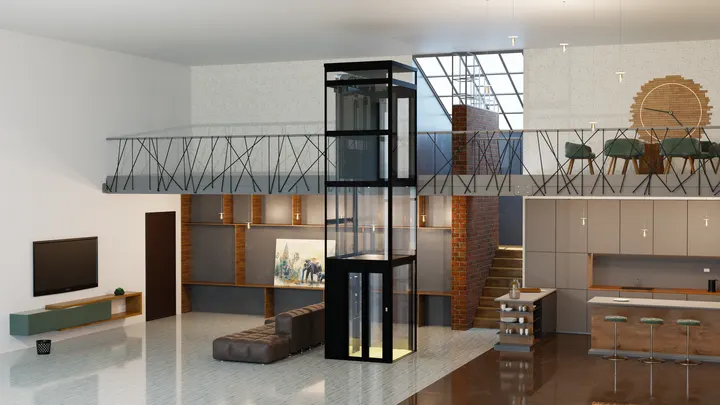
- Modern appearance: Glass panels and panoramic designs can complement contemporary home interiors.
- Flexible installation: Certain lift technologies can be installed in existing homes with minimal civil modifications.
- Improved convenience: They make transporting groceries, luggage and everyday household items between floors easier.
For homeowners planning to maximise available space, choosing the right compact lift technology is essential.
Types of Compact Residential Lifts for Small Homes in India
Different residential lift technologies are available in India. Each type has different installation requirements, operating mechanisms and space considerations.
1. Pneumatic Vacuum Home Lifts
Pneumatic
vacuum home lifts use air pressure differences to move the elevator cabin between floors. Unlike conventional elevators that depend on cables, counterweights or hydraulic systems, these lifts use an air-driven operating mechanism.
Their cylindrical, self-supporting design makes them suitable for homes where installing a traditional elevator shaft may not be practical.
Key features:
- No conventional lift shaft or deep pit required.
- No separate machine room required.
- Self-supporting structural design.
- Transparent panoramic cabin options.
- Single-phase power operation, depending on the model.
- Suitable for new and existing residential properties.
Pneumatic vacuum lifts are worth considering for homeowners looking for a compact elevator with modern aesthetics and reduced structural requirements.
2. Hydraulic Home Lifts
Hydraulic home lifts operate using a hydraulic pump and fluid pressure to move the elevator cabin. They are commonly used in residential buildings and low-rise properties.
However, hydraulic systems generally require additional space for equipment and may need a dedicated shaft or structural arrangements.
Key features:
- Hydraulic lifting mechanism.
- Suitable for low-rise residential buildings.
- Different cabin sizes and finishes.
- Smooth vertical movement.
- Requires regular system maintenance.
Hydraulic lifts can be suitable for homes with sufficient installation space and the necessary structural provisions.
3. Traction Home Lifts
Traction elevators use ropes or belts and a motor-driven pulley system to move the elevator cabin. They are commonly found in commercial buildings but are also available in residential configurations.
Some residential traction lifts use machine-room-less technology to reduce equipment space requirements.
Key features:
- Motor-driven lifting mechanism.
- Suitable for multi-floor residential buildings.
- Different cabin configurations.
- Available with modern control systems.
- Requires appropriate shaft and installation provisions.
Although traction lifts provide a familiar elevator experience, homeowners should evaluate their space and construction requirements before installation.
4. Screw-Driven Home Lifts
Screw-driven lifts use a motor-operated screw and nut mechanism to move the cabin vertically. These systems are designed for residential applications and can be considered for low-rise homes.
Depending on the model, they may offer compact configurations and flexible installation options.
Key features:
- Screw-based lifting technology.
- Residential-friendly cabin designs.
- Suitable for selected low-rise applications.
- Different interior configurations.
- Requires periodic mechanical maintenance.
Homeowners should compare operating noise, maintenance requirements and available space before choosing this technology.
Important Features to Look for in a Compact Home Lift
Choosing a residential lift involves more than checking its dimensions. Homeowners should evaluate safety, accessibility, operating requirements and long-term convenience.
Here are some important features to consider.
1. Space-Efficient Design
A
compact lift should fit comfortably within the available floor area without significantly affecting the movement and functionality of other rooms.
Measure the proposed installation area and check the manufacturer’s minimum space requirements before making a decision.
2. Safety Mechanisms
Safety should be a priority when selecting a residential elevator.
Look for features such as:
- Emergency descent functionality.
- Door interlocking mechanisms.
- Emergency lighting.
- Power failure protection.
- Overload protection.
- Reliable cabin communication systems.
Always verify the safety certifications and technical specifications of the selected model.
3. Power Consumption
Electricity consumption is another important consideration. Different lift technologies use different operating mechanisms and power requirements.
Some pneumatic home lifts operate using a single-phase power supply, making them suitable for many residential properties. However, actual energy consumption depends on the model, usage frequency and operating conditions.
4. Cabin Design and Accessibility
The cabin should provide sufficient space for the intended passengers and household requirements.
Consider the following:
- Cabin dimensions.
- Door opening width.
- Entry and exit convenience.
- Handrail availability.
- Lighting and ventilation.
- Interior finishes.
A well-designed cabin can improve everyday usability while complementing the home’s appearance.
How Much Space Is Required for a Compact Residential Lift?
The space required depends on the elevator technology, passenger capacity, cabin dimensions and number of floors.
Traditional elevators generally require dedicated shafts and additional structural arrangements. In comparison, certain compact residential lifts are designed to reduce these requirements.
For example, some pneumatic vacuum home lift models feature a compact cylindrical structure with an approximate footprint of 3.3 feet in diameter.
This can make them an option for homes where conventional elevator installation may be challenging.
However, the actual installation area should always be confirmed through a professional site inspection. Door clearance, floor openings, ceiling height and access requirements also need to be considered.
Factors Affecting the Cost of Compact Residential Lifts in India
The cost of installing a compact residential lift varies depending on several factors. There is no single price applicable to every home because installation requirements and product specifications differ.
The major factors influencing the price include:
1. Number of floors: Lifts serving more floors may require additional components and configuration changes.
2. Passenger capacity: The required cabin size and weight capacity influence the overall cost.
3. Lift technology: Pneumatic, hydraulic, traction and screw-driven systems have different manufacturing and installation requirements.
4. Cabin design: Glass cabins, premium finishes and customised interiors can affect pricing.
5. Safety features: Additional safety technologies and optional features may influence the final investment.
6. Installation requirements: Civil modifications, electrical arrangements and site conditions can contribute to the total cost.
Before purchasing, request a detailed quotation that includes the lift, installation, warranty and maintenance requirements.
Why Consider NIBAV Home Lifts for Small Homes?
For homeowners looking for a compact residential elevator, NIBAV Home Lifts offers pneumatic vacuum technology designed specifically for residential applications.
Its air-driven operating mechanism and self-supporting cylindrical structure make it an option for homes where conventional elevator construction may be difficult.
Some notable features of NIBAV Home Lifts include:
- Space-efficient construction: Designed with a compact cylindrical footprint.
- No conventional pit or machine room: Reduces the need for certain structural arrangements associated with traditional elevators.
- Self-supporting structure: Designed to operate without requiring conventional supporting walls.
- Panoramic cabin: Transparent construction offers a modern appearance and visibility.
- Single-phase power: Supports residential electrical configurations, depending on the model.
- Safety technologies: Selected models include emergency descent, door interlocks and other safety features.
- Modern interiors: Different cabin finishes and configurations are available.
NIBAV offers different home lift models to accommodate residential requirements. Homeowners can explore the available configurations and select a model based on their property layout, passenger capacity and preferred features.
Tips for Choosing the Right Compact Residential Lift
Before finalising a residential lift, consider these practical tips:
- Evaluate available space: Measure the installation area and identify suitable locations on every floor.
- Understand your requirements: Decide how many people will use the lift regularly and whether wheelchair accessibility is necessary.
- Compare lift technologies: Understand the differences between pneumatic, hydraulic, traction and screw-driven systems.
- Check safety certifications: Review product documentation, safety features and applicable certifications.
- Consider maintenance: Ask about routine servicing, replacement components and long-term maintenance costs.
- Review warranty coverage: Understand what is included in the warranty and the availability of after-sales support.
- Request a site inspection: Get professional advice before confirming the installation.
These steps can help homeowners make an informed decision and avoid unnecessary construction expenses.
Conclusion
Compact residential lifts are an effective way to improve accessibility and convenience in small Indian homes. With several technologies available, homeowners can choose an elevator that matches their space, budget, design preferences and daily requirements.
While hydraulic, traction and screw-driven lifts offer different residential applications, pneumatic vacuum home lifts provide an alternative for properties where minimising structural modifications and saving space are important considerations.
Before making a decision, compare the installation requirements, safety features, passenger capacity, power consumption and maintenance needs of different models.
If you are planning to install a compact residential lift, explore the options offered by
NIBAV Home Lifts and arrange a professional consultation to identify a suitable solution for your home.
















Leave a Reply