


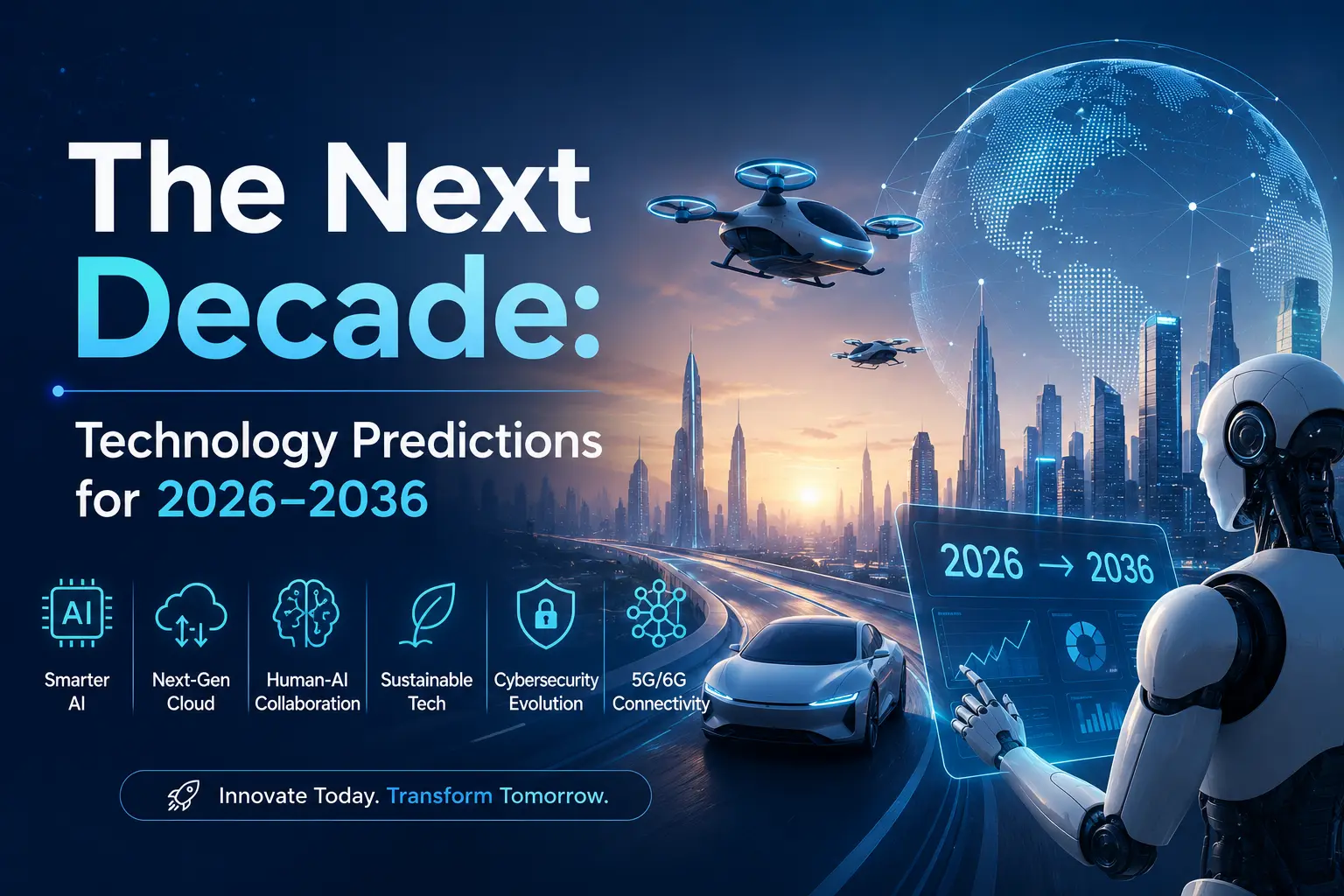
The pace of innovation is accelerating, reshaping how we interact with the world. Over the next ten years, advancements in artificial intelligence, energy storage, and biotechnology will transition from experimental concepts to foundational pillars of daily life. Anticipating these shifts allows us to prepare for a future defined by increased automation, personalized healthcare, and sustainable infrastructure.
Evolution of Artificial Intelligence and Human-Machine Collaboration
By 2036, artificial intelligence will move past simple generative tasks to become an autonomous partner in complex problem-solving. We are entering an era of “agentic” systems—AI that does not just provide information but executes multi-step workflows independently. Expect these tools to manage everything from logistical supply chains to personalized educational curricula, adapting in real-time to human feedback and evolving environments.
-
Autonomous Agentic Workflows: Software will transition from a passive tool into an active participant capable of managing schedules, financial transactions, and professional projects without constant oversight.
-
Intuitive Human-Machine Interfaces: Advanced neuro-link technologies and high-fidelity sensors will allow for seamless communication between human thought and digital systems, reducing the reliance on physical keyboards and screens.
-
Decentralized Intelligence: Edge computing will place processing power directly onto local devices, ensuring that AI responses are nearly instantaneous and highly private, without needing constant cloud connectivity.
The Sustainable Energy Revolution
The next decade will see a definitive shift toward decentralized, “everything-to-grid” energy models. As renewable energy generation becomes cheaper and more efficient, the focus will move to storage and distribution. Innovations in material science are already enabling surfaces that passively regulate temperature and batteries that can be charged in minutes, effectively decoupling economic growth from carbon emissions.
-
Distributed Energy Networks: Household assets—including electric vehicles and stationary battery storage—will become active participants in the electrical grid, selling excess power back to utility providers during peak demand.
-
Next-Generation Storage: Advances in direct lithium extraction and solid-state battery chemistry will lower the cost and environmental impact of energy storage, making long-term grid stability a reality.
-
Passive Thermal Management: The widespread adoption of radiative cooling materials in construction will drastically reduce the need for traditional electrical air conditioning, slashing energy consumption in urban centers.
Precision Biotechnology and Personalized Healthcare
Healthcare will evolve from a reactive model—treating symptoms as they appear—to a proactive, preventative system driven by genetic data. By 2036, routine diagnostics will likely include continuous biological monitoring, allowing for medical interventions before physical symptoms even manifest. Molecular engineering and gene-editing tools will provide cures for conditions that were previously considered lifelong ailments.
-
Customized Molecular Medicine: Therapies will be designed for specific genetic profiles, minimizing side effects and maximizing efficacy in treating oncology and autoimmune disorders.
-
Bio-Digital Integration: Wearable health monitors will be replaced by internal biosensors that feed real-time health metrics into predictive models, allowing physicians to detect cellular abnormalities years earlier than current imaging techniques.
-
Regenerative Bio-Manufacturing: Advancements in synthetic biology will enable the laboratory cultivation of tissues and organs, addressing the critical shortage of donors and eliminating the risk of transplant rejection.
Conclusion
The convergence of AI, sustainable energy, and biotechnology will fundamentally redefine the human experience by 2036. While these technologies promise unprecedented efficiency and medical breakthroughs, they also necessitate a focus on ethical implementation and accessibility. Preparing for this decade means embracing the transition toward more intuitive, sustainable, and personalized digital ecosystems.
Frequently Asked Questions
1. Will AI replace most human jobs by 2036?
While AI will automate routine tasks and some professional workflows, it is more likely to change the nature of work rather than eliminate it. The focus will shift toward roles that require high-level human oversight, emotional intelligence, and complex strategy.
2. How will we ensure energy grid stability with renewables?
Stability will be managed through “everything-to-grid” systems, where millions of distributed batteries—such as those in electric vehicles—act as a collective reserve, balancing supply and demand in real-time.
3. Are there risks associated with new brain-computer interfaces?
As with any transformative technology, security and privacy are paramount. Development is currently focused on robust encryption and clinical safeguards to ensure these interfaces remain safe and user-controlled.
4. How soon will precision medicine be available for the general public?
Many elements of precision medicine, such as genetic testing and targeted cancer therapies, are already in use. Over the next decade, these will become increasingly affordable and standard across primary healthcare systems.
5. How will environmental sustainability be maintained during this tech growth?
Technological growth is being designed with “circular” principles, prioritizing the recycling of materials like lithium and the development of energy-efficient hardware to ensure that innovation does not come at the cost of the environment.





Leave a Reply