


So, Can You Give Your Dog Benadryl?
Short answer: yes, in most cases. Benadryl (diphenhydramine) is one of the few human medications vets actually recommend for dogs, and it’s sat in my own dog’s first-aid drawer for years — mostly for bee stings and the occasional seasonal sneezing fit that turns him into a sniffling mess every spring.
But “yes” comes with conditions. The dose matters, the formulation matters, and your dog’s health history matters. Get any of those wrong and a helpful antihistamine turns into a trip to the emergency vet. So let’s get into the actual numbers, not just vague reassurances.
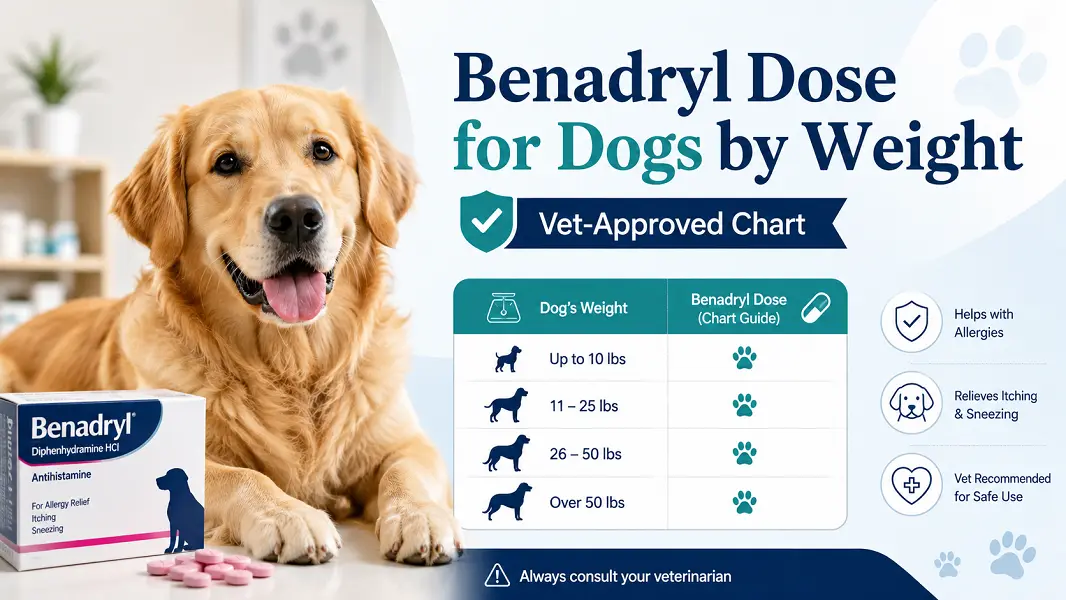
Benadryl Dose for Dogs by Weight (Chart)
The standard vet-cited dose for diphenhydramine is 1 mg per pound of body weight, given two to three times a day. Here’s how that breaks down using standard 25 mg tablets:
| Dog’s Weight | Benadryl Dose (mg) | Approx. Tablets (25 mg each) |
|---|---|---|
| 5 lbs | 5 mg | 1/4 tablet (liquid often easier) |
| 10 lbs | 10 mg | 1/2 tablet |
| 20 lbs | 20 mg | 3/4 tablet |
| 30 lbs | 30 mg | 1 tablet |
| 40 lbs | 40 mg | 1.5 tablets |
| 50 lbs | 50 mg | 2 tablets |
| 75 lbs | 75 mg | 3 tablets |
| 100 lbs | 100 mg | 4 tablets |
A few things worth flagging here. First, this chart is a general guideline pulled from commonly cited veterinary dosing — it isn’t a prescription for your specific dog. Some vets round down for cautious dosing, especially with senior dogs, small breeds, or dogs with liver or kidney issues. Second, always confirm with your vet before the first dose, particularly if your dog is on any other medication. Diphenhydramine interacts with a handful of drugs, including some sedatives and certain heart medications.
What Benadryl Actually Helps With
Can I give my dog Benadryl for itching? Usually, yes. It’s commonly used for mild allergic reactions — think environmental allergies, mild hives, or itchiness after a bug bite. Can I give my dog Benadryl for allergies more broadly, like food sensitivities? It can take the edge off symptoms, but it won’t fix an underlying food allergy. That needs a proper elimination diet and, ideally, a vet’s input.
It also helps with:
- Motion sickness (some vets recommend giving it 30 minutes before car travel)
- Mild anxiety, like fireworks or thunderstorms, though it’s not a strong sedative and results vary a lot dog to dog
- Vaccine reactions — mild facial swelling after a shot is one of the more common reasons vets recommend it on the spot
I’ll be honest, though — it’s not magic. My dog’s spring allergies get maybe 60% better on Benadryl. It takes the itch down from “miserable” to “manageable,” not zero. If your dog’s symptoms are severe or don’t improve within a day or two, that’s your cue to call the vet rather than upping the dose yourself.
How Often Can I Give My Dog Benadryl for Itching?
Every 8 hours is the typical spacing, so two to three doses in a 24-hour period. Don’t stack doses closer together hoping for faster relief — diphenhydramine has a sedative effect, and too much too soon can leave your dog wobbly, disoriented, or unusually lethargic.
If you’re using it for something ongoing, like seasonal allergies that last weeks, check in with your vet about whether daily use makes sense or whether a longer-term allergy medication (like cetirizine or a prescription option) would serve your dog better.
Is Benadryl Safe for Dogs? The Honest Answer
Mostly, yes — but “mostly” is doing some work in that sentence.
Benadryl is not safe for dogs that:
- Have glaucoma
- Have a history of seizures or certain heart conditions
- Are pregnant or nursing (without vet clearance)
- Have prostate issues or urinary retention problems
And here’s the part people miss most often: check the label. Only use plain diphenhydramine. Products labeled “Benadryl-D” or anything combined with a decongestant (like pseudoephedrine) are dangerous for dogs. Same goes for any liquid formulation containing xylitol — that ingredient alone can be fatal to dogs in fairly small amounts, and it’s snuck into more sugar-free products than people realize.
Is Benadryl Good for Dogs Long-Term?
For occasional, situational use — a bee sting, a stressful car ride, a rough allergy week — it’s a reasonable tool to have on hand. For chronic conditions, it’s more of a stopgap than a solution. Long-term antihistamine use can cause dry mouth, mild sedation that dogs seem to just get used to (which isn’t necessarily a good thing), and it doesn’t address whatever’s actually driving the allergic response.
If you’re reaching for the Benadryl bottle more than a couple times a month, that’s usually a sign to have a real allergy conversation with your vet instead of just managing symptoms indefinitely.
Side Effects to Watch For
Most dogs handle it fine, but keep an eye out for:
- Drowsiness (the most common one, by far)
- Dry mouth
- Increased or decreased appetite
- Urinary retention
- In rare cases, hyperactivity instead of sedation — some dogs get the opposite reaction
If your dog seems significantly off after a dose — stumbling, extreme lethargy, rapid heartbeat — stop giving it and call your vet or an emergency animal hospital.
A Quick Real-World Example
A neighbor of mine gave her 15-lb terrier a full adult-strength Benadryl tablet (25 mg) after a wasp sting, assuming “close enough” was fine. It wasn’t a dangerous dose exactly, but it was more than double what her dog needed, and the poor thing was sedated and stumbling for most of the afternoon. No lasting harm, but it’s a good reminder: weight-based dosing exists for a reason, and eyeballing it isn’t worth the risk.
Bottom Line
Benadryl for dogs is a genuinely useful, vet-endorsed option for mild allergic reactions, motion sickness, and situational anxiety — when dosed correctly and used in the right situations. It’s not a cure-all, and it’s not risk-free for every dog. When in doubt, a quick call to your vet before that first dose is worth five minutes of your time.
FAQs
1. How much Benadryl can I give my dog?
The general rule is 1 mg per pound of body weight, given two to three times daily — but always confirm with your vet first.
2. How much Benadryl for a 10 lb dog?
Around 10 mg, roughly two to three times a day.
3. How much Benadryl for a 50 lb dog?
About 50 mg per dose, which is roughly two standard 25 mg tablets.
4. Is Benadryl safe for dogs every day?
For short stretches, generally yes, but daily long-term use should be discussed with a vet, especially for older dogs or those with existing health conditions.
5. Can I give my dog Benadryl for itching?
Yes, it’s commonly used for mild itching from allergies or insect bites, though severe or persistent itching needs a vet visit.
6. Can I give my dog Benadryl for allergies?
Yes, for mild seasonal or environmental allergies. It won’t resolve food allergies on its own.
7. How often can I give my dog Benadryl for itching?
Typically every 8 hours, not more frequently, unless your vet advises otherwise.
8. Is Benadryl bad for dogs with heart conditions?
It can be risky for dogs with certain heart conditions — always check with a vet before giving it if your dog has a known heart issue.
9. What type of Benadryl is safe for dogs?
Plain diphenhydramine only. Avoid anything labeled “D” (decongestant) or containing xylitol.
10. Can puppies have Benadryl?
Only under vet guidance — dosing and safety can differ significantly for puppies compared to adult dogs.
11. What happens if I give my dog too much Benadryl?
Signs of overdose include severe lethargy, rapid heart rate, dilated pupils, or disorientation — contact your vet or an emergency clinic immediately.
12. Does Benadryl make dogs sleepy?
Yes, drowsiness is the most common side effect, which is why it’s sometimes used to ease travel anxiety too.
13. Can I give my dog Benadryl for anxiety?
It can take the edge off mild situational anxiety, like car rides, but it’s not a strong or reliable anxiety treatment for most dogs.
14. How long does Benadryl take to work in dogs?
Usually within 30 minutes to an hour, with effects lasting about 8 hours.
15. Should I check with my vet before giving my dog Benadryl?
Yes — especially for first-time use, dogs on other medications, or dogs with existing health conditions.












Leave a Reply