


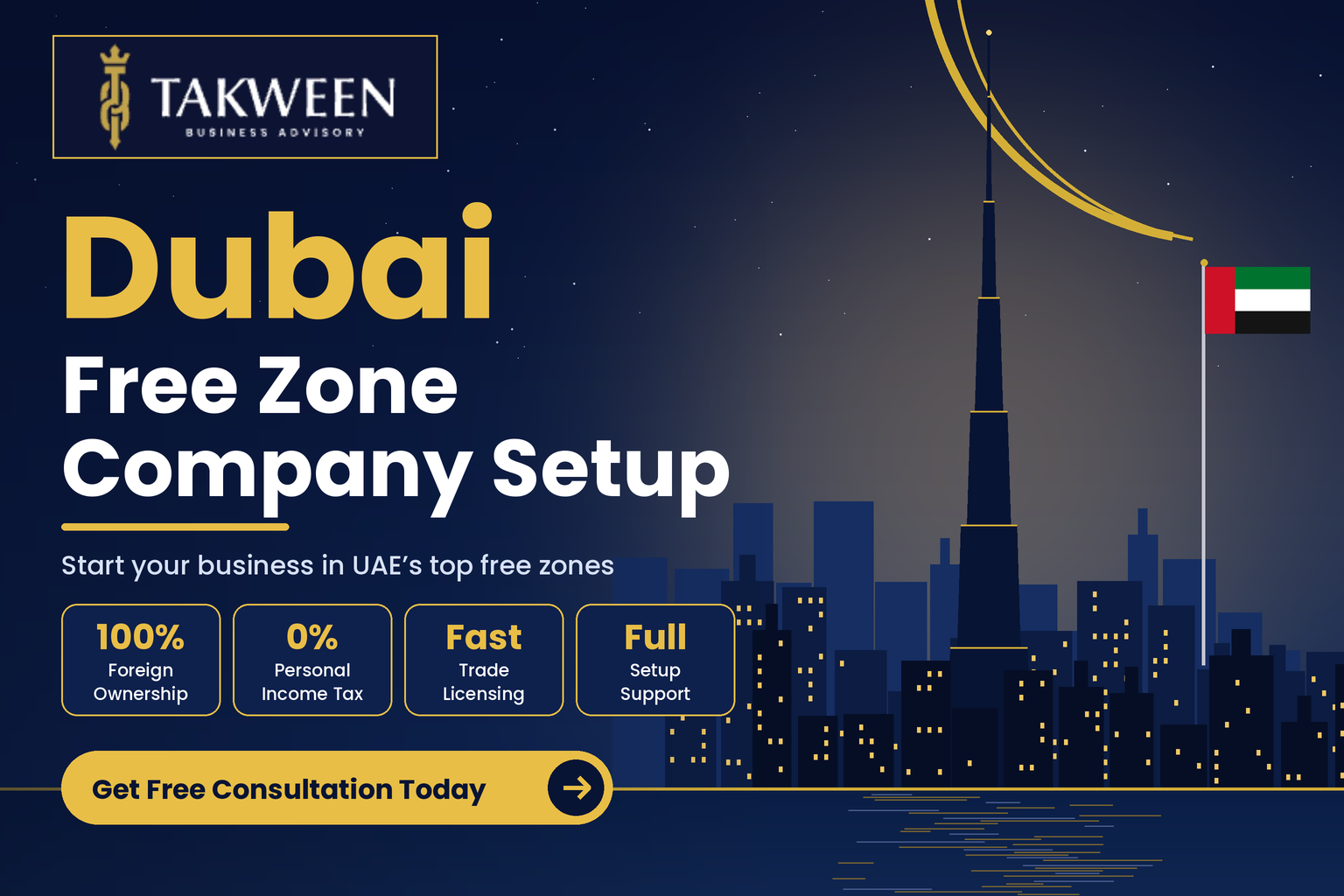
Dubai has become one of the world’s leading destinations for entrepreneurs, startups, and international investors looking to establish a business in a globally connected market. Its modern infrastructure, strategic location, business-friendly environment, and access to international markets make it an attractive choice for companies across different industries. With support from Takween Advisory, entrepreneurs can better understand the company formation process, explore suitable business jurisdictions, and navigate the requirements involved in establishing a business in the UAE.
One of the main reasons international investors consider dubai free zone company setup is the opportunity to establish a business within a specialised economic zone with specific ownership, licensing, and operational benefits. Dubai’s free zones cater to industries such as technology, trading, logistics, media, finance, and professional services. These zones provide an organised business environment that helps entrepreneurs establish operations while accessing regional and international markets.
1. 100% Foreign Ownership Opportunities
One of the biggest attractions of Dubai’s free zones is the opportunity for foreign investors to maintain 100% ownership of their companies, subject to the relevant free zone regulations.
Unlike traditional business structures that may involve different ownership considerations, free zone companies generally allow international entrepreneurs to establish businesses without requiring a local equity partner.
This arrangement gives foreign investors greater control over business decisions, company management, and long-term planning.
2. Strategic Location for International Business
Dubai’s geographical location makes it an important connection point between Asia, Europe, Africa, and the Middle East.
Businesses operating from Dubai can benefit from access to international customers, suppliers, distributors, and commercial networks. Its established aviation, shipping, and logistics infrastructure also supports companies involved in import, export, trading, and international services.
For entrepreneurs planning to expand beyond their home markets, establishing a presence in Dubai can provide valuable opportunities to develop international business relationships.
3. Different Free Zones for Various Industries
Dubai offers several free zones designed to support businesses operating in specific sectors. Entrepreneurs can explore different jurisdictions depending on their proposed business activities and operational requirements.
Some well-known examples include:
- DMCC: Supports businesses involved in commodities, trading, and various professional activities.
- Dubai Internet City: Provides an ecosystem for technology companies and digital businesses.
- Dubai Media City: Caters to media, advertising, communications, and creative industries.
- Dubai International Financial Centre (DIFC): Provides a specialised financial and professional services environment.
- Jebel Ali Free Zone (JAFZA): Supports logistics, manufacturing, trading, and industrial businesses.
- Dubai Silicon Oasis: Supports technology, innovation, and knowledge-based businesses.
Selecting the appropriate free zone is important because each jurisdiction has its own licensing framework, permitted activities, and operational requirements.
4. Business-Friendly Company Formation Procedures
Dubai’s free zones offer structured company registration procedures designed to help entrepreneurs establish businesses efficiently.
Although the exact process varies between jurisdictions, company formation generally involves selecting a business activity, choosing a legal structure, reserving a company name, preparing the required documents, and submitting the licence application.
Depending on the free zone and business activity, additional approvals or supporting documents may also be necessary.
Professional guidance from Takween Advisory can help entrepreneurs understand these requirements, organise their paperwork, and make informed decisions during the company formation process.
5. Access to Modern Business Infrastructure
Another reason Dubai attracts international investors is its advanced business infrastructure.
Free zones offer access to different workplace arrangements, including:
- Flexible office spaces.
- Shared workstations.
- Dedicated office facilities.
- Warehousing and storage facilities.
- Business centres.
- Industry-specific infrastructure.
These facilities allow companies to select an environment that matches their operational needs. For example, a technology startup may require a flexible workspace, while a trading or logistics company may need warehousing and distribution facilities.
6. Tax Advantages and Business Incentives
Dubai’s free zones are also attractive because qualifying businesses may benefit from specific tax incentives under the UAE corporate tax framework.
However, it is important to understand that free zone companies are not automatically exempt from corporate tax. A Qualifying Free Zone Person may benefit from a 0% corporate tax rate on qualifying income, provided the applicable conditions are satisfied. Non-qualifying income may be subject to the relevant corporate tax rules.
Businesses must also understand their VAT obligations, registration requirements, recordkeeping responsibilities, and applicable reporting procedures.
Seeking professional tax guidance can help entrepreneurs understand the regulations that apply to their business activities.
7. Visa and Residency Opportunities
Free zone company formation can also provide eligible business owners with opportunities to apply for UAE residency visas.
Depending on the selected free zone, company structure, and applicable eligibility requirements, entrepreneurs may be able to apply for investor or partner visas and sponsor eligible employees.
The number of visas available may depend on factors such as office facilities, free zone regulations, and the company’s licensing arrangements.
For international entrepreneurs planning to relocate to Dubai, understanding these options can be an important part of business planning.
8. Professional Support for a Smooth Setup
Although Dubai offers an attractive environment for company formation, foreign entrepreneurs still need to understand licensing rules, documentation, regulatory procedures, and ongoing compliance requirements.
This is where professional business consultancy can make a difference.
Takween Advisory helps entrepreneurs understand business setup requirements and navigate administrative procedures in the UAE. From exploring suitable business structures to understanding licensing and documentation requirements, professional guidance can help make the formation journey more organised.
Working with an experienced consultancy also allows business owners to concentrate on their business objectives while better understanding the responsibilities associated with establishing a company.
Frequently Asked Questions (FAQs)
1. Why do foreign investors prefer Dubai free zones for company formation?
Foreign investors are attracted to Dubai’s free zones because of foreign ownership opportunities, specialised business environments, international market access, modern infrastructure, and structured company registration procedures.
2. Can foreigners own 100% of a free zone company in Dubai?
Yes. Dubai free zones generally allow 100% foreign ownership, subject to the regulations and requirements of the selected free zone.
3. Which free zone is best for starting a business in Dubai?
The most suitable free zone depends on the proposed business activity, industry, operational requirements, licensing conditions, and target market. Entrepreneurs should compare different jurisdictions before making a decision.
4. What documents are required for Dubai free zone company formation?
Common documents include passport copies of shareholders, application forms, proposed company names, business activity details, and other supporting documents. Requirements vary between free zones.
5. Can a Dubai free zone company conduct business in mainland UAE?
Free zone companies must follow applicable UAE regulations when conducting business in the mainland. Depending on the activity and arrangement, additional permissions, licences, or an appropriate mainland structure may be required.
6. Are Dubai free zone companies exempt from corporate tax?
No. Free zone companies are subject to the UAE corporate tax framework. Eligible Qualifying Free Zone Persons may benefit from a 0% rate on qualifying income if they meet the required conditions.
7. Can free zone company owners get a UAE residency visa?
Eligible company owners may apply for residency visas through their free zone, subject to immigration rules, company requirements, and applicable approvals.
8. How can Takween Advisory help with free zone company formation?
Takween Advisory helps entrepreneurs understand company formation options, licensing procedures, documentation requirements, and relevant business setup formalities in Dubai.
Conclusion
Dubai continues to attract entrepreneurs and international investors because of its strategic location, foreign ownership opportunities, specialised free zones, modern infrastructure, and access to global markets. These advantages make it an attractive destination for startups, trading companies, technology businesses, and professional service providers.
However, selecting the right free zone requires careful consideration of business activities, licensing conditions, operational needs, and compliance responsibilities. With professional guidance from Takween Advisory, entrepreneurs can better understand their options and approach company formation with confidence while building a strong foundation for long-term business growth in the UAE.










Leave a Reply