


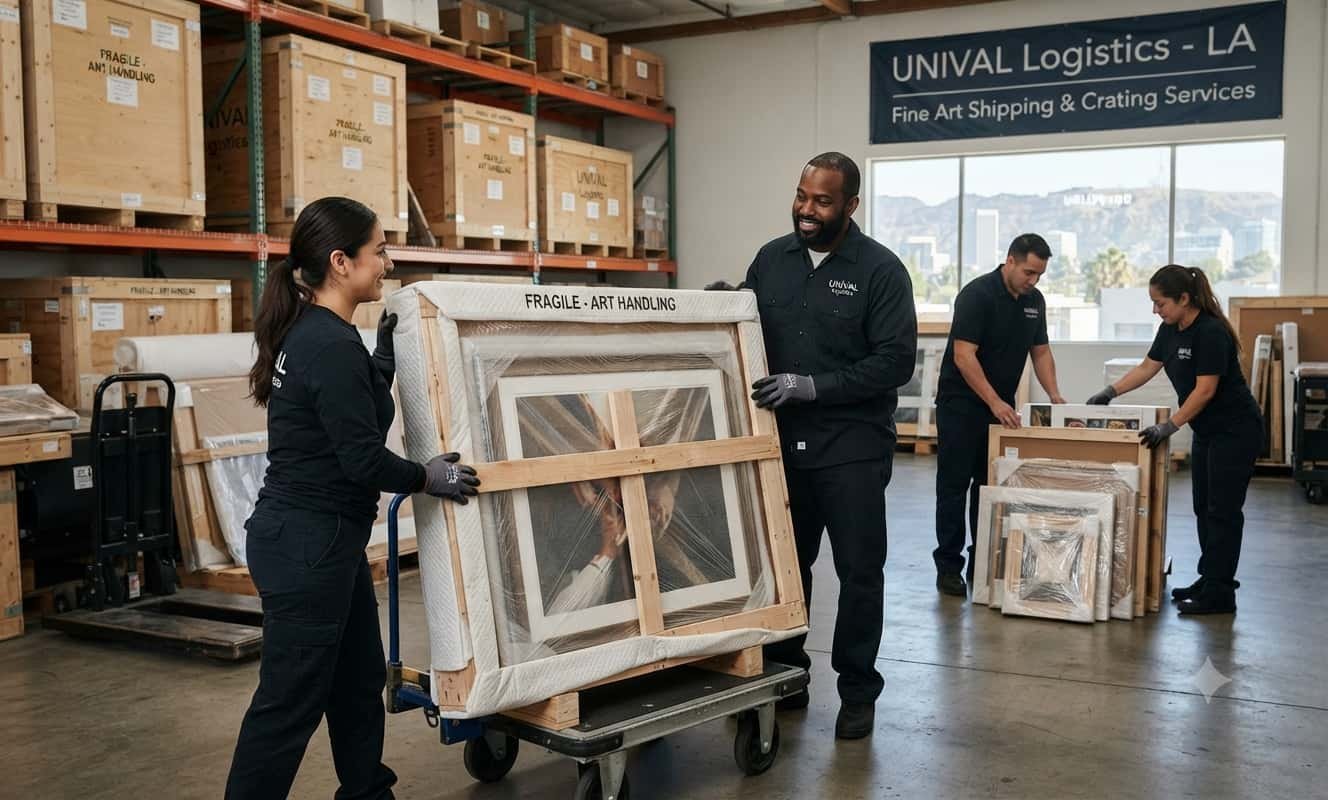
Summary: Custom crating and blanket wrap serve different purposes in fine art transportation. Crates provide a rigid protective structure, while blanket wrap cushions artwork during carefully managed handling and movement. The right option depends on the artwork’s condition, dimensions, fragility, value, route and transport environment. UNIVAL Logistics helps customers evaluate these factors, plan suitable packing and arrange secure transportation.
Overview: Shipping artwork requires more than placing an item inside a box or covering it with moving blankets. Paintings can have delicate surfaces, sculptures may contain fragile projections, and framed pieces can be vulnerable to pressure and vibration. A suitable packing method reduces the risk of scratches, punctures, impact damage and movement during transit. This guide explains how custom crating compares with blanket wrap, when each method may be appropriate, what affects the cost and how to prepare artwork for professional transportation.
Key Takeaways:
- Custom crating creates a rigid protective enclosure for fragile, valuable or complex artwork.
- Blanket wrap provides padded surface protection for suitable pieces during controlled handling.
- Neither method is right for every artwork. Material, dimensions, condition and journey all matter.
- Glass, delicate finishes, protruding parts and unusual shapes may require additional protection.
- UNIVAL Logistics can help assess packing and transportation requirements for eligible artwork.
Quick Answer: Custom crating is generally the stronger choice for fragile, high-value or long-distance artwork, while blanket wrap may suit sturdy pieces moving over shorter, controlled routes. UNIVAL Logistics helps plan suitable protection for art shipping in Los Angeles.
Why Artwork Needs the Right Packing Method
Artwork can be damaged by pressure, vibration, moisture, sudden movement and careless handling. Even a short journey can create problems if a painting is not supported correctly or a sculpture is allowed to move inside its packaging. The packing method should protect the artwork without putting unnecessary pressure on delicate surfaces.
For collectors, galleries, artists and businesses arranging art shipping Los Angeles, the decision often comes down to two options: custom crating or blanket wrap. Both can provide protection, but they are designed for different situations.
Custom crating creates a rigid outer structure around the artwork. Blanket wrap uses padded materials to protect the surface during handling and transportation. The best choice depends on the artwork itself, the distance, the vehicle, the number of handling stages and the level of protection required.
UNIVAL Logistics helps customers review these requirements before arranging transportation. A suitable plan considers the artwork’s condition and value, not just its size.
What Is Custom Crating for Artwork?
Custom crating means building a protective container to fit a specific artwork or group of pieces. The crate usually has a strong outer structure and internal supports that help keep the item stable during transit.
A professional crate may include a wooden frame, protective panels, foam cushioning, internal braces and a suitable barrier against environmental exposure. The design depends on the artwork’s shape, weight, materials and handling needs.
How Custom Crating Works
The process begins with measuring and assessing the artwork. The packing team checks its dimensions, weight, condition and vulnerable areas. They also consider how the piece will be lifted, loaded, transported and removed at the destination.
The artwork receives suitable surface protection before it is placed inside the crate. Internal supports then help prevent shifting. Cushioning should absorb reasonable movement without pressing against fragile areas.
A well-designed crate should also allow handlers to move the artwork safely. Handles, skids and clear orientation labels can make loading and unloading easier.
When Custom Crating Is the Better Choice
Custom crating is often the preferred option for:
- High-value paintings and original works.
- Fragile sculptures and three-dimensional pieces.
- Artwork with delicate frames or protruding details.
- Large or unusually shaped pieces.
- Long-distance transportation with multiple handling stages.
- Artwork requiring additional protection during storage or transit.
For these shipments, a rigid outer structure can reduce the risk of impact and accidental pressure. It also helps keep the artwork in a controlled position during movement.
However, a crate alone does not guarantee safe delivery. The internal supports, cushioning, handling plan and transport conditions must all be suitable for the specific piece.
What Is Blanket Wrap for Artwork?
Blanket wrap is a soft packing method that uses padded moving blankets or similar protective materials around an item. It helps reduce scratches, scuffs and minor contact damage during careful handling.
This method is generally more suitable for sturdy artwork that can tolerate controlled movement. It is often used for local transportation when the item can be loaded, secured and delivered without repeated transfers or rough handling.
Blanket wrap is not the same as simply covering a painting with an ordinary household blanket. Fine art may require a clean protective layer between the artwork and the padding. The material must not rub against paint, gilding, varnish or other sensitive surfaces.
How Blanket Wrap Works
Before wrapping, handlers assess the artwork’s surface and condition. They identify fragile corners, frames, glass panels and other areas that need extra support.
A suitable protective layer is applied first. Padding is then placed around the piece, with additional protection for vulnerable edges and corners. The wrapped artwork must be secured in the vehicle so that it cannot slide, lean against other cargo or experience unnecessary pressure.
Handlers should avoid placing straps directly over delicate surfaces. The artwork should also remain separated from tools, furniture and other objects that could cause damage.
When Blanket Wrap May Be Suitable
Blanket wrap may work well for:
- Sturdy framed artwork.
- Durable decorative pieces.
- Certain sculptures with strong, stable construction.
- Short local moves with controlled handling.
- Artwork that has already received suitable surface protection.
It may also be practical when the shipment requires frequent access or when a rigid crate would be unnecessary for the artwork and journey.
However, blanket wrap does not provide the same rigid impact protection as a properly designed crate. It should not be selected only because it is quicker or less expensive.
Custom Crating vs. Blanket Wrap: Key Differences
The main difference is the level and type of protection each method provides.
Protection Against Impact
Custom crating provides a rigid outer barrier. With suitable internal cushioning, it can help protect artwork from external pressure and accidental contact.
Blanket wrap provides padding against surface scratches and minor bumps. It offers less protection against heavy objects, crushing pressure and direct impact.
For fragile or valuable artwork, custom crating is generally the stronger option.
Protection Against Movement
A properly designed crate can hold artwork in position with internal supports. This reduces unwanted movement during transportation.
Blanket wrap depends more heavily on careful loading and secure placement inside the vehicle. If the piece shifts or comes into contact with another object, the padding may not prevent damage.
Protection During Long-Distance Shipping
Long-distance journeys can involve additional handling, transfers, loading equipment and changes in transport conditions. Custom crating is often more suitable for these situations because it provides a stronger physical enclosure.
Blanket wrap may be appropriate for a short, controlled journey, but it should not be treated as a complete substitute for a shipping crate.
Cost and Convenience
Blanket wrap usually requires fewer materials and less preparation. It can be a practical option for suitable artwork moving over a short distance.
Custom crating requires measurements, materials, construction and additional labor. The process can take more time and cost more, but it may be justified by the artwork’s value, fragility or transport requirements.
The lowest initial packing cost is not always the most economical choice. A packing method that does not provide enough protection can expose the owner to much greater loss.
How to Choose the Right Method for Art Shipping Los Angeles
The right decision starts with an assessment of the artwork and its journey. There is no single packing method that works for every painting, sculpture or framed piece.
Consider the Artwork’s Material
Oil paintings, acrylic paintings, works on paper, photographs, textiles and sculptures have different protection needs.
A painted surface may be sensitive to direct contact. Works on paper may need protection from moisture, bending and pressure. Sculptures may have delicate projections or uneven weight distribution.
The protective materials should be selected for the artwork’s surface and construction. Bubble wrap, adhesive tape and ordinary blankets should never be placed directly against a vulnerable artwork surface without confirming that the contact material is suitable.
Check the Artwork’s Condition
Existing damage can make transportation more complicated. Loose paint, unstable frames, cracked components and fragile attachments may require professional assessment before packing.
Photograph the artwork before collection. Record existing marks, cracks, scratches and other visible issues. If the item is particularly fragile or has conservation concerns, consult a qualified conservator before moving it.
Review the Route and Handling Requirements
A direct local journey may need a different packing plan from a shipment involving several transfers or extended storage.
Consider the distance, vehicle type, loading access, stairs, elevators and delivery conditions. Also confirm whether the artwork will be handled by one team or passed between multiple parties.
For more demanding journeys, a crate may offer better protection. For suitable pieces on controlled routes, blanket wrap may be sufficient.
Consider the Artwork’s Value
The financial and personal value of an artwork should influence the protection plan. An original painting, limited-edition work or valuable sculpture may justify additional packing and handling measures.
Insurance arrangements should also be reviewed before transportation. Confirm the covered value, eligible items, exclusions, documentation requirements and claim conditions. Do not assume that a carrier’s declared value automatically provides full insurance coverage.
UNIVAL Logistics can help customers discuss suitable transportation and protection requirements for eligible artwork.
Preparing Paintings and Sculptures for Transportation
Good preparation reduces unnecessary handling and helps the transport team understand what they are moving.
Prepare Paintings and Framed Artwork
Check the frame, hanging hardware, glazing and corners before collection. Remove loose accessories where appropriate, but do not attempt to dismantle a fragile frame without professional guidance.
Paintings should have suitable surface protection. A conservation-safe interleaf may be needed to prevent direct contact with packing materials. Protective boards and corner supports can provide additional stability.
For paintings behind glass, discuss glazing protection with the packing specialist. Broken glass can create further damage, so the packing plan should account for this risk.
Prepare Sculptures and Three-Dimensional Art
Sculptures need support that matches their shape and weight distribution. A fragile arm, thin projection or decorative attachment should not carry the weight of the object during transportation.
A custom support or internal brace may be required to keep the sculpture stable. Large or heavy pieces may also need a suitable base, lifting points or skid system.
Never lift a sculpture by its most delicate component. Handlers should identify stable support points before moving it.
Record Condition and Shipment Details
Create a clear record before packing. Useful information includes:
- Current photographs of the artwork.
- Artist, title and description, where available.
- Dimensions and approximate weight.
- Appraisal, invoice or other value documentation.
- Existing damage or condition notes.
- Collection and delivery instructions.
These records help with handling, insurance review and any later claim assessment.
Common Packing Mistakes to Avoid
Even good packing materials can cause problems when used incorrectly. Avoid these common mistakes when preparing artwork for transportation.
Wrapping artwork without a protective surface layer: Direct contact with rough fabric, plastic or bubble wrap may mark delicate finishes. Use materials suitable for the artwork.
Choosing blanket wrap for every item: A blanket cannot provide the rigid protection required by some fragile or high-value pieces.
Building a crate without proper internal support: An artwork that moves inside a crate can still suffer damage. The internal fit and cushioning are essential.
Using tape on the artwork: Adhesives should never touch painted surfaces, delicate frames or other vulnerable finishes.
Ignoring environmental conditions: Heat, cold and humidity changes may affect sensitive materials. Consider the route and transport environment when planning the shipment.
Skipping condition photographs: Without clear records, it can be harder to identify when damage occurred.
Leaving packing until the last minute: Custom crating and specialist handling may require advance planning. Allow enough time for assessment, preparation and collection.
Secure Handling and Shipping Insurance for Artwork
Packing is only one part of safe art transportation. The handling process, vehicle conditions, route planning and delivery procedure also matter.
A suitable transport plan should identify how the artwork will be collected, loaded, secured and delivered. High-value pieces may require controlled handoffs, limited handling and signed delivery confirmation.
Insurance should be discussed before the shipment moves. Ask whether the artwork is eligible for coverage, how its value must be established and what conditions apply. Keep invoices, appraisals, photographs and other supporting records available.
UNIVAL Logistics provides high-value shipping solutions and full-value insurance options up to $150,000 for eligible shipments, subject to approval and applicable terms, conditions and exclusions. Customers should confirm the available coverage for their specific artwork before booking.
For art shipping in Los Angeles, it is important to match the packing method with the transportation plan. A well-built crate cannot replace careful handling, and blanket wrap cannot replace the stronger protection required by fragile artwork.
Art Shipping Los Angeles: What Affects the Cost?
The cost of transporting artwork depends on the packing method, dimensions, weight, value, distance and service requirements. Custom crating generally involves more preparation and materials than blanket wrap, but the final price varies by item.
There is no single reliable price for every shipment. A small framed print and a large, fragile sculpture require very different resources.
The main cost categories include:
- Artwork assessment and preparation: Quoted according to the item’s condition, size and handling requirements.
- Blanket wrap and protective materials: Quoted based on the number of items, padding requirements and labor.
- Custom crate design and construction: Quoted according to crate dimensions, materials, internal supports and complexity.
- Collection and transportation: Quoted based on distance, vehicle requirements, access conditions and delivery schedule.
- Special handling: Additional charges may apply for oversized artwork, difficult access, lifting equipment, multiple handlers or controlled handoffs.
- Shipping insurance: Cost depends on the declared value, eligibility, coverage terms and shipment details.
- Storage or additional services: Quoted separately when temporary storage, scheduled delivery or other arrangements are required.
Important Disclaimer
All prices are baseline estimates only and may change due to market fluctuations, supplier changes, material costs, labor requirements and variable logistics fees. Actual charges depend on the artwork, packing method, declared value, route and selected services. Contact UNIVAL Logistics for the latest and most accurate prices and a shipment-specific quotation before booking.
Why Choose UNIVAL Logistics for Art Shipping in Los Angeles?
Choosing a transportation provider for artwork involves more than comparing delivery prices. You need a team that understands the importance of suitable packing, careful handling, shipment planning and clear communication.
UNIVAL Logistics supports high-value shipping requirements for businesses and individuals transporting eligible valuable items. Its services can help customers plan secure transportation based on the artwork, route and delivery needs.
Protection Based on the Artwork
Not every artwork needs a custom crate, and not every item is suitable for blanket wrap. UNIVAL Logistics helps customers consider the nature of the shipment and identify the protection requirements before transportation.
Clear Planning and Communication
A well-planned shipment should have clear collection details, delivery instructions and handling expectations. Confirming these details in advance helps reduce confusion during pickup and delivery.
Insurance Options for Eligible Shipments
UNIVAL Logistics offers full-value insurance options up to $150,000 for eligible shipments, subject to applicable terms and conditions. Customers should confirm coverage availability, limits and documentation requirements before dispatch.
Practical Transportation Solutions
The right service depends on the artwork’s dimensions, value, route and handling needs. UNIVAL Logistics can discuss transportation options for suitable domestic and international shipments.
For collectors, galleries, artists and businesses, the goal is simple: choose a protection plan that reflects the real needs of the artwork. Contact UNIVAL Logistics to discuss your shipment and request a tailored quotation.
Final Thoughts on Custom Crating vs. Blanket Wrap
Custom crating and blanket wrap both have a place in artwork transportation, but they do not provide the same level of protection. Custom crating is generally better for fragile, valuable, oversized or long-distance shipments. Blanket wrap may be suitable for sturdy artwork moving through a controlled local process.
The most important step is to assess the artwork before choosing the packing method. Consider its materials, condition, value, shape and journey. Then plan the packing, handling, insurance and delivery requirements together.
UNIVAL Logistics helps customers arrange suitable high-value transportation for eligible artwork. With careful planning and the right protection, you can reduce avoidable risks and make the shipping process more predictable.
Frequently Asked Questions
1. Is custom crating better than blanket wrap for artwork?
Custom crating usually provides stronger physical protection because it creates a rigid outer enclosure. Blanket wrap provides padding against scratches and minor contact damage. The best option depends on the artwork’s condition, value, size and route.
2. When should I use a custom art crate?
Consider a custom crate for fragile paintings, valuable sculptures, oversized pieces, delicate frames and artwork traveling long distances. It may also be appropriate when the shipment involves multiple handling stages or additional protection requirements.
3. Is blanket wrap safe for paintings?
Blanket wrap can be suitable for stable paintings during controlled transportation, provided the surface receives appropriate protection first. It should not touch delicate paint, varnish or decorative finishes directly. Fragile or valuable paintings may need a more protective packing solution.
4. Does custom crating prevent all shipping damage?
No packing method can eliminate every transportation risk. A well-designed crate can reduce exposure to impact and pressure, but safe handling, suitable internal support, secure loading and appropriate transport conditions remain important.
5. How much does art shipping in Los Angeles cost?
The price depends on artwork dimensions, weight, value, packing requirements, distance, insurance and handling needs. Blanket wrap may cost less than custom crating, but a shipment-specific quotation is necessary to establish the actual price. Contact UNIVAL Logistics for current pricing.
6. Does artwork need insurance during transportation?
Insurance is worth considering, especially for valuable or fragile pieces. Confirm the item’s eligibility, covered value, exclusions, claim requirements and policy conditions before shipping. Do not assume that standard carrier liability provides full-value protection.
7. Can sculptures be shipped using blanket wrap?
Some sturdy sculptures may be suitable for blanket wrap when they have stable construction and can be secured safely. Fragile projections, delicate materials and uneven weight distribution may require custom supports or a crate.
8. How should I prepare artwork before collection?
Photograph the artwork, record its condition, confirm its dimensions and weight, and gather invoices or appraisal documents. Avoid applying tape or unsuitable packing materials directly to the artwork. Share handling instructions and access details with the transport provider.
9. Does UNIVAL Logistics offer insurance options for artwork shipments?
UNIVAL Logistics offers full-value insurance options up to $150,000 for eligible shipments, subject to approval and applicable terms, conditions and exclusions. Confirm the available coverage and required documents before arranging transportation.
10. How do I choose between custom crating and blanket wrap?
Start by reviewing the artwork’s fragility, value, materials, dimensions and travel distance. Custom crating is generally more suitable for fragile or high-value pieces, while blanket wrap may work for sturdy artwork on controlled local routes. A shipment assessment can help determine the appropriate method.












Leave a Reply