


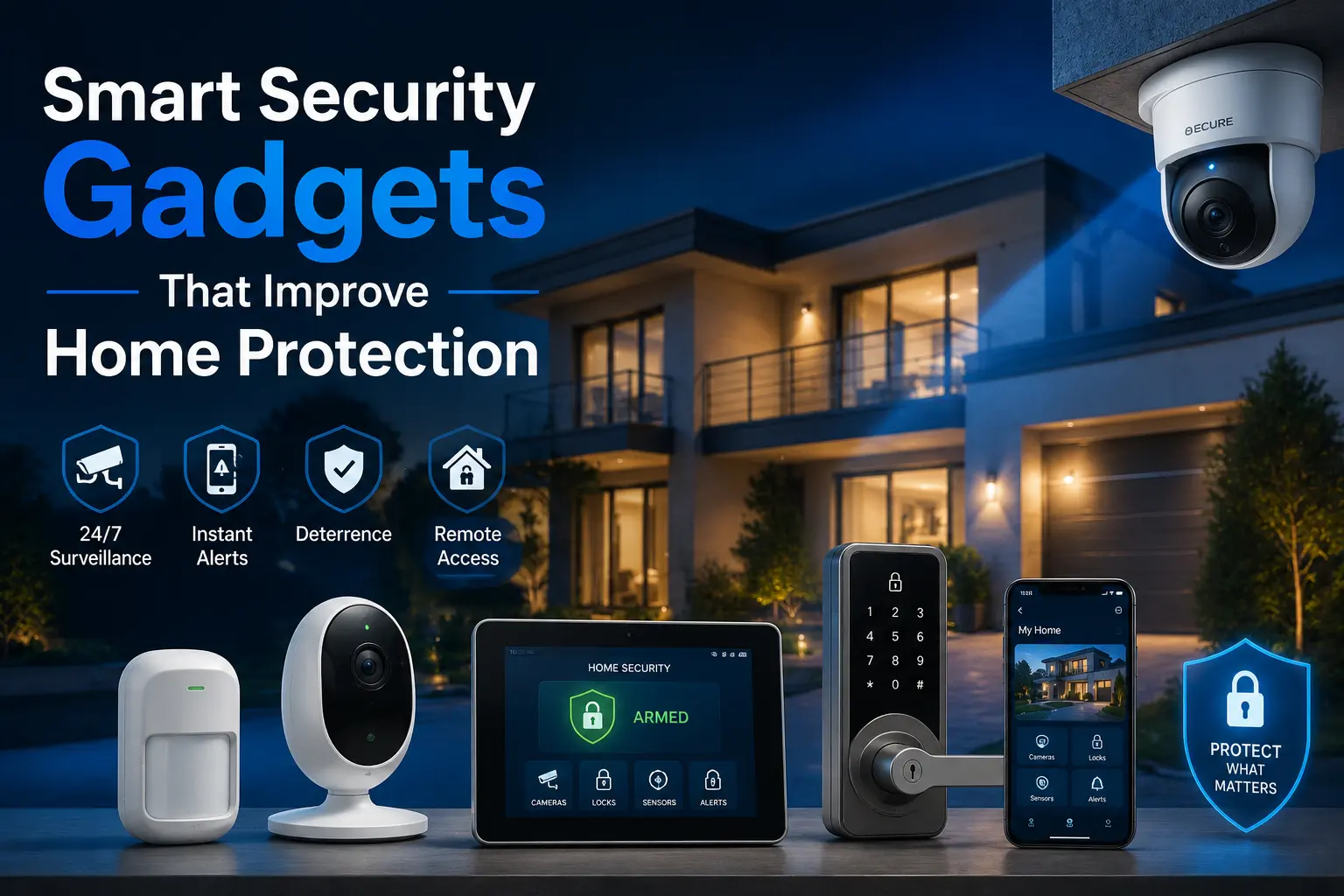
Modern home security has evolved into a proactive, interconnected ecosystem. Rather than relying solely on traditional alarms, today’s smart security gadgets work in concert to identify potential threats before they escalate. By utilizing advanced sensors, artificial intelligence, and real-time mobile integration, these devices provide comprehensive coverage that keeps your property secure and your mind at ease.
Essential Components of a Proactive Security Setup
Building a resilient security layer starts with identifying the most vulnerable entry points and securing them with intelligent hardware. These devices act as your perimeter defense, offering visibility and immediate response capabilities.
-
AI-Enhanced Video Doorbells: Modern doorbells do more than record visitors; they use advanced algorithms to distinguish between delivery personnel, neighbors, and potential intruders. This reduces false alerts while ensuring you receive notifications for relevant activity.
-
Biometric Smart Locks: Traditional keys are increasingly obsolete. Smart locks allow for fingerprint, PIN, or smartphone-based access, offering granular control over who can enter your home and when. Many versions now include built-in cameras to provide visual logs of every entry attempt.
-
Pet-Friendly Motion Sensors: Advanced interior sensors now possess the intelligence to differentiate between household pets and human movement, virtually eliminating false alarms that once plagued early motion-detection technology.
-
Floodlight Cameras: Combining bright LED illumination with high-definition recording, these devices provide active deterrence. They expose suspicious activity in outdoor areas while recording clear footage, even in total darkness.
How Modern Systems Orchestrate Protection
The real power of smart security lies in the synergy between devices. A well-designed system functions as a unified “brain,” where individual sensors share information to create a comprehensive picture of your home’s status.
-
Integrated Automation: When a sensor is triggered, the system can automatically activate interior lights, lock all external doors, and begin recording from all surrounding cameras, ensuring an immediate and coordinated response.
-
Edge-Processing Intelligence: New devices process data locally on the hardware itself rather than relying on distant cloud servers. This increases speed, ensures functionality during internet outages, and keeps sensitive footage private.
-
Predictive Behavioral Monitoring: Systems now learn the typical rhythms of your household. If an unusual event occurs—such as a door opening during the middle of the night—the system instantly flags the anomaly and alerts your mobile device.
-
Redundant Connectivity: Robust security setups utilize multiple communication paths, including cellular backups and battery reserves. This ensures that even if your primary Wi-Fi or power goes down, the system remains active and continues to monitor your home.
Enhancing Privacy and Data Integrity
As homes become more digital, protecting the integrity of your security data is as important as the physical hardware itself. Look for devices that prioritize encryption and secure boot processes to prevent unauthorized access. The focus is shifting toward “security by default,” where hardware is hardened against digital threats right out of the box. By prioritizing systems with transparent data practices and localized storage options, you can enjoy the benefits of high-tech protection without compromising personal privacy.
Frequently Asked Questions
1. Can smart security devices function without an internet connection? Yes. Many modern systems use local hubs that maintain communication between sensors and cameras even if the primary internet goes offline. Some advanced models also include cellular backups to ensure you continue to receive alerts during service outages.
2. Will smart motion sensors trigger alerts for my pets? No. Most modern interior sensors are specifically tuned to ignore the movement of common house pets. You can usually calibrate these sensors to ignore objects below a certain weight, ensuring peace of mind without constant false notifications.
3. Are smart locks secure against hacking? Yes, when used with reputable systems. Modern smart locks utilize heavy-duty encryption similar to online banking, making them extremely difficult to breach digitally. They often provide more security than traditional locks, which can be easily picked or bypassed.
4. How does biometric access improve home security?Biometrics like fingerprint recognition eliminate the risks associated with lost, copied, or stolen physical keys. They ensure that only authorized individuals can access your home, and they provide an audit trail so you can see exactly who entered and at what time.
5. What is “edge processing” in security cameras?Edge processing means the camera analyzes video footage directly on the device’s own chip. This makes the system faster, allows it to detect people or vehicles instantly, and keeps your private video data more secure by reducing the amount of information sent to the cloud.






Leave a Reply