


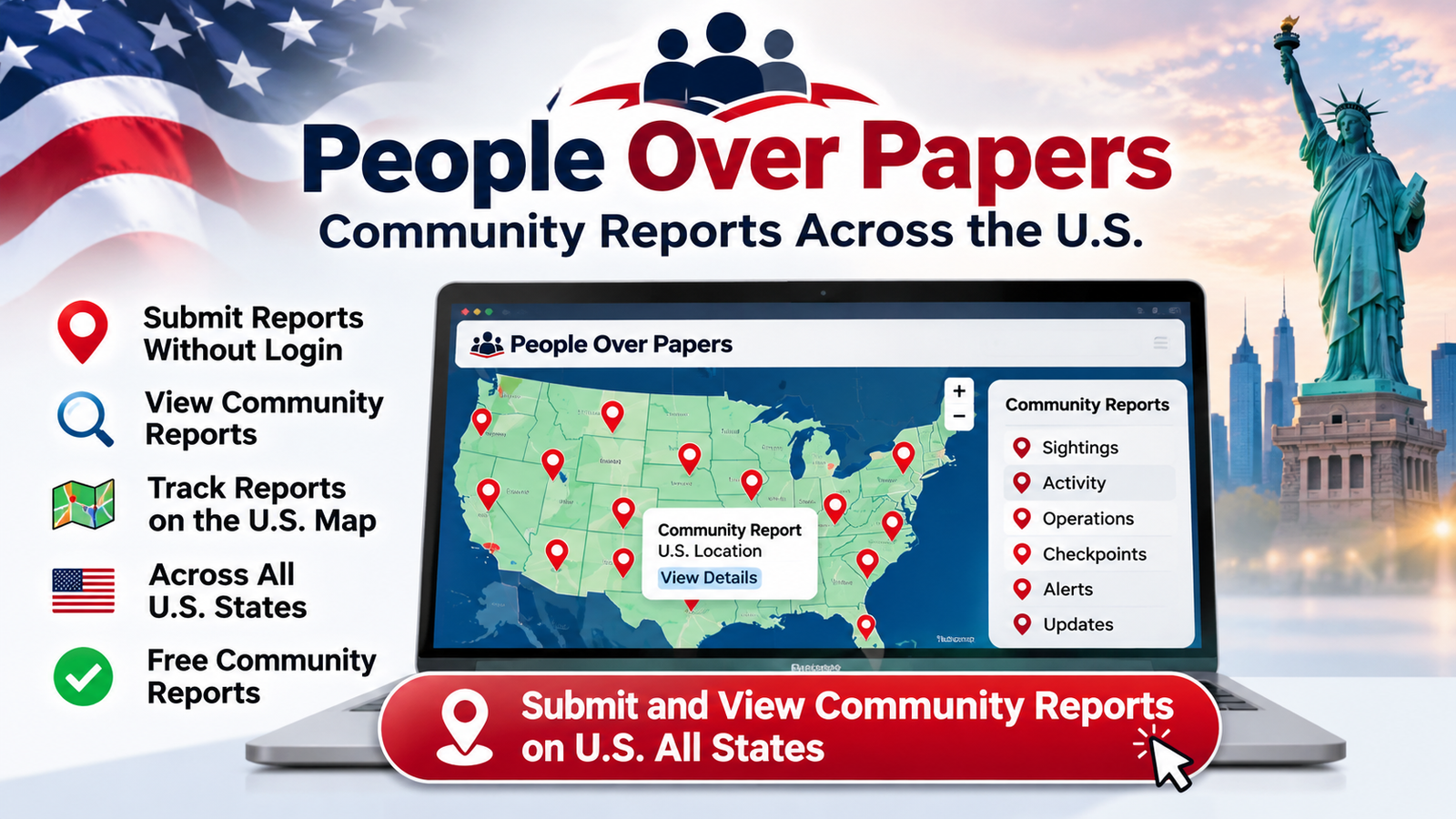
Finding useful local information can be difficult when important updates are scattered across social media posts, community discussions, news reports, and personal messages. People often hear about an incident or a developing situation through several different sources, but finding information that is organized and easy to understand is not always straightforward. This is particularly important when people want to stay informed about issues affecting communities across the United States.
That is where Submit Reports Easily on People Over Papers can be useful. The platform gives people a place to submit community reports and view available reports through a map covering the United States. Visitors can explore submitted information and contribute relevant updates without needing to create an account. Its purpose is to make community information easier to access and understand, while encouraginprog responsible sharing.
Why Accessible Community Information Matters
People rely on different sources to understand what is happening around them. A local social media group may share an update, a neighbour may pass along information, and another person may discover a relevant report through an online discussion. Although these sources can be useful, information spread across multiple platforms can be difficult to follow.
A centralized community map offers another way to explore such information. Instead of searching through unrelated posts, visitors can look at reports organized by location and category. This can help people understand where information has been submitted and identify updates that may be relevant to their communities.
Accessibility is important as well. Not everyone has the time or experience to search through multiple websites. A straightforward platform can make it easier for visitors to browse information, understand what a report says, and decide whether they need to look for additional details.
Community information should not replace reliable reporting or official guidance. Its value comes from making submitted information easier to discover, not from presenting every submission as a confirmed fact.
How a Community Reporting Map Works
A community reporting map connects information submitted by visitors with approximate geographic locations. Rather than treating every submission as a separate social media post, the map provides a shared place where visitors can explore available reports.
The process generally involves three important steps.
First, someone with relevant information submits a report. The submission should focus on useful, non-identifying details and avoid unnecessary personal information.
Second, the report goes through a review process before it appears publicly. Reviewing submissions helps reduce unsuitable material and protects privacy. It also gives the platform an opportunity to check whether a submission follows its reporting guidelines.
Third, approved reports can be displayed on the map using approximate locations. Visitors can browse the available information and read the details provided with each report.
This approach makes community contributions easier to organize. However, a review process should not be confused with independent verification of every claim. Visitors should consider the information provided, its date, and its context before drawing conclusions.
Exploring the People Over Papers Map Tracker
The People over papers map tracker provides a map based way to explore available community reports across the United States. Visitors can use the platform to view reports that have been approved for publication and understand the general locations associated with those submissions.
The map is designed to support information sharing rather than track individuals or provide real-time monitoring. Locations are approximate, and reports are reviewed before publication. This distinction matters because a community map should help people access information without exposing private details or creating a misleading impression of certainty.
Visitors can explore the map to see whether reports are available in areas of interest. They can also contribute information when they have something relevant to share. The ability to submit and view community reports across all U.S. states gives the platform a nationwide scope, although the number of available reports may vary from one location to another.
A state or area with no visible report should not automatically be interpreted as an area where nothing has happened. It may simply mean that no approved submission is currently available for that location.
What Makes a Useful Community Report?
A useful report is clear, relevant, and responsible. It should provide enough context for another person to understand the general situation without revealing private information.
For example, a submission may describe a community concern, share a general update, or point visitors toward a relevant resource. The information should be presented in straightforward language and should avoid unnecessary speculation.
There are several good practices contributors should follow:
- Provide a clear description of the information being shared.
- Include relevant context without exaggerating what happened.
- Avoid publishing private addresses or identifying details about individuals.
- Do not share photographs or information that could expose someone’s identity.
- Avoid repeating rumours or presenting unconfirmed claims as established facts.
- Make the timing of an update clear whenever possible.
These practices help make community information more useful to readers. They also reduce the risk of a report causing confusion or unnecessary concern.
Protecting Privacy While Sharing Information
Privacy deserves particular attention when information concerns sensitive community situations. A report may be relevant to others, but that does not mean every detail should be made public.
Publishing a person’s name, exact home address, private contact information, or identifiable personal details can create unnecessary risks. Responsible reporting focuses on the general information people need while leaving out details that could expose someone.
Approximate locations provide one way to balance accessibility and privacy. They allow visitors to understand the general area associated with a report without displaying an exact address.
Contributors should also think carefully before uploading images or descriptions. Information that identifies private individuals should not be included simply to make a report appear more detailed.
A useful community platform should encourage people to share information thoughtfully, not reward the publication of sensitive details.
Why Moderation Is Important
Open community submissions can provide valuable information, but they also create challenges. A public reporting platform may receive incomplete descriptions, duplicate submissions, outdated updates, or information that cannot be confirmed.
Moderation helps address some of these issues. Reviewing reports before publication allows unsuitable submissions to be screened and helps maintain basic standards for public content.
However, moderation has limits. A reviewed submission is not necessarily an independently verified account of an event. Readers should understand that distinction and avoid treating a map entry as official confirmation.
Clear explanations about the purpose and limitations of a platform help establish realistic expectations. Visitors should know what information is available, how submissions are handled, and what conclusions they should not draw from a report.
Community Participation Makes Information More Useful
A community reporting platform depends on responsible participation. People who submit useful information help create a resource that others can explore. Visitors who read reports carefully can also help prevent misunderstandings by considering the context rather than sharing information without checking it.
Participation does not require every visitor to become a frequent contributor. Some people may only want to browse available reports. Others may have relevant information to submit. Both activities are part of a community information system.
The ability to submit and view reports without creating an account can also reduce barriers for people who want to contribute. A simple process makes participation more accessible, provided that submissions still follow privacy and content guidelines.
At the same time, contributors should remember that information may be incomplete or outdated. If a situation changes, an earlier report may no longer describe what is happening. Readers should therefore pay attention to the information available with each submission.
A Nationwide Approach With Local Relevance
The United States includes communities with different needs, local circumstances, and information sources. A nationwide map can provide a common place to explore submissions while allowing visitors to focus on the locations that matter to them.
Its usefulness will naturally depend on participation. Some areas may have more submissions than others, while certain locations may have no approved reports available at a particular time. This is normal for a community-driven resource and should be understood when interpreting the map.
A nationwide platform should not imply that every location has been covered or that every relevant event appears on the map. Its role is to make available community information easier to find, not to provide a complete record of events across the country.
Using Community Reports Responsibly
Community reports are most useful when readers approach them with care. A map can help organize information, but it cannot replace direct confirmation, professional reporting, or official guidance when those sources are needed.
Before acting on information, visitors should consider when it was submitted, what it actually says, and whether additional reliable information is available. They should avoid making assumptions based on a location marker alone.
The same responsibility applies when sharing reports with others. Reposting an incomplete or outdated submission without context can create confusion. Sharing information accurately and preserving the original context helps people understand its limitations.
People Over Papers is intended as a community information resource. It is not a government agency, emergency service, official alert system, or live incident tracker. Visitors should use appropriate official channels for urgent situations and consult reliable sources when they need confirmed information.
Making Community Information Easier to Find
Access to understandable information can make a difference in how people follow issues affecting their communities. When relevant submissions are organized in one place, visitors have another way to discover what others have shared and explore information by general location.
A well-used community map depends on clear reporting practices, thoughtful moderation, privacy awareness, and realistic expectations. These principles are just as important as the technology behind the platform.
People Over Papers brings these ideas together through a nationwide map where people can submit and view available community reports. By keeping the process accessible and emphasizing responsible information sharing, the platform aims to make community contributions easier to discover across the United States.
Its value ultimately depends on how carefully information is submitted, reviewed, presented, and interpreted. When contributors and readers approach community reports responsibly, a shared information resource can become a more useful way to stay informed.





Leave a Reply