


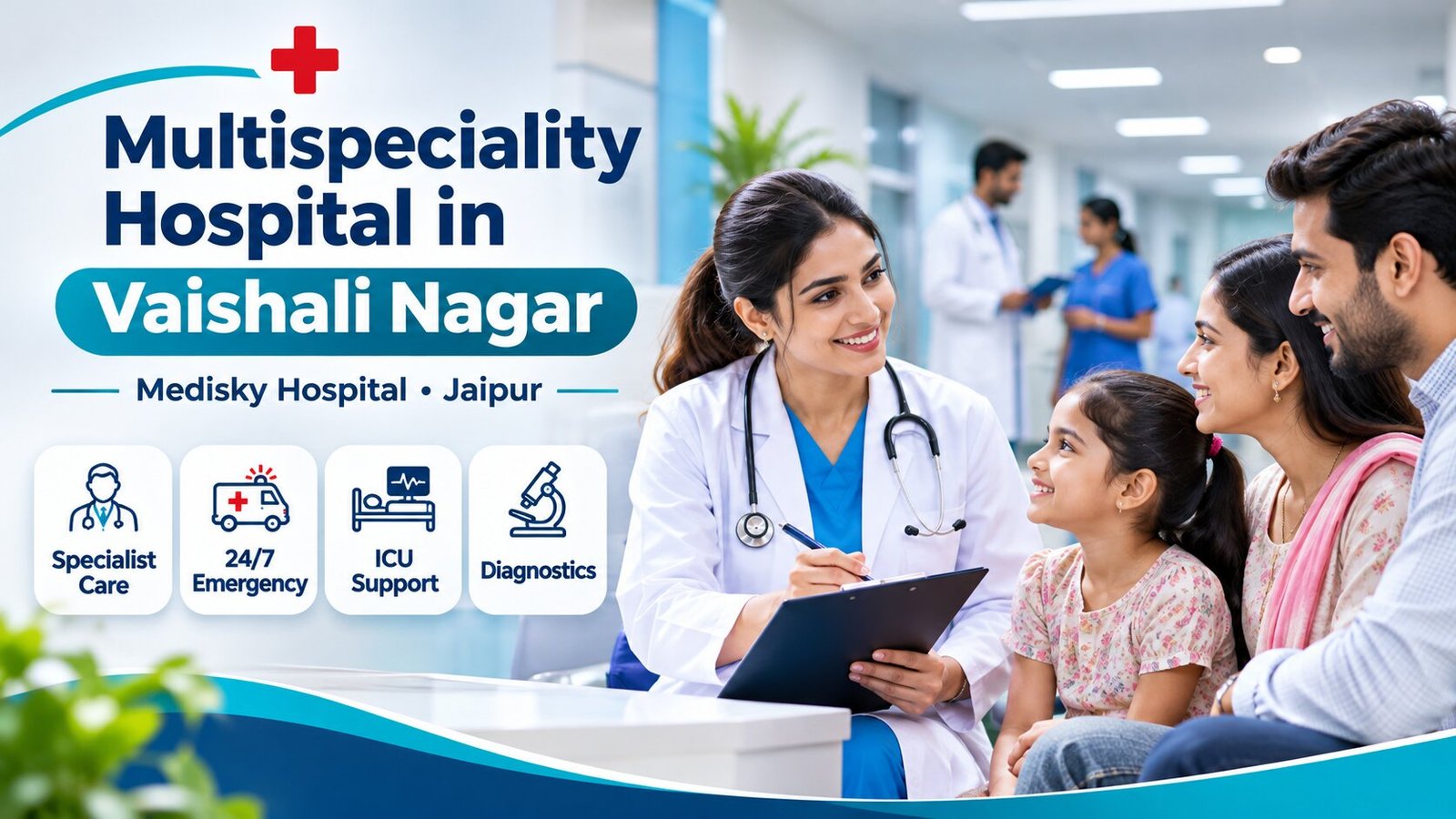
When Should You Visit a Multispeciality Hospital in Vaishali Nagar? 7 Important Situations Explained
Taking care of your health involves more than treating an illness when symptoms appear. It also means recognising when you need medical attention, understanding which specialist to consult, and choosing a healthcare facility that can provide appropriate treatment.
For people living in Jaipur, finding a multispeciality hospital in Vaishali Nagar can make it easier to access different medical services within one location.
Whether someone is experiencing recurring health problems, managing an existing medical condition, or preparing for surgery, a multispeciality hospital may offer the medical support they need.
However, many people are unsure when they should visit a multispeciality hospital instead of a regular clinic.
In this article, we explain seven common situations in which multispeciality healthcare can be helpful and what patients should consider before choosing a hospital.
What Makes a Multispeciality Hospital Different?
A multispeciality hospital offers medical services across several departments, allowing patients to consult different specialists depending on their health concerns.
For example, a patient experiencing persistent back pain may require an orthopaedic consultation, while someone managing high blood pressure or diabetes may need ongoing care from a physician.
In some situations, patients may also need diagnostic investigations, specialist procedures, or hospital admission.
A multispeciality hospital can make these services more convenient when the appropriate facilities are available.
The main advantage is the opportunity to access several types of healthcare within the same medical centre.
1. When You Have a Health Problem That Is Not Improving
Many common health problems improve with appropriate treatment. However, symptoms that continue, repeatedly return, or become worse should not be ignored.
For example, a person may experience frequent headaches, recurring abdominal discomfort, persistent joint pain, or unusual tiredness.
These symptoms can have different causes and may require further medical evaluation.
A doctor may recommend additional investigations or refer the patient to a specialist based on their medical history and examination findings.
At a multispeciality hospital, patients may be able to access the appropriate department and recommended investigations in one place.
When to seek help: Arrange a medical consultation for symptoms that persist, worsen, or interfere with everyday activities. Sudden severe symptoms require urgent assessment.
2. When You Are Managing More Than One Medical Condition
Some patients live with multiple health conditions that require ongoing attention.
For instance, a person with diabetes may also have high blood pressure, joint problems, or heart-related concerns.
Managing several conditions can involve different medications, regular monitoring, and consultations with multiple healthcare professionals.
In these situations, coordinated medical care becomes particularly important.
A multispeciality hospital may provide access to different doctors who can review the patient’s health needs and work together when necessary.
This approach can help patients receive medical advice that considers their overall health rather than focusing on one condition alone.
Patients should maintain updated medical records and inform every treating doctor about the medicines they are currently taking.
3. When You Need Different Medical Specialists
Not every medical condition can be evaluated by the same type of doctor.
Some health concerns require specialist knowledge and additional examinations.
A hospital offering several departments may be useful when patients need consultations related to:
- General Medicine: Common adult illnesses and chronic health conditions.
- Orthopaedics: Bone, joint, muscle, and injury-related problems.
- Cardiology: Heart-related conditions and cardiovascular evaluation.
- Neurology: Medical concerns involving the brain and nervous system.
- Gynaecology: Women’s reproductive and gynaecological health.
- General Surgery: Conditions that may require surgical assessment.
The availability of different specialties can make it easier to arrange consultations based on the patient’s requirements.
However, patients should confirm that the hospital has a qualified specialist for their particular condition before booking an appointment.
4. When Your Doctor Recommends Diagnostic Investigations
Medical tests can provide useful information about a patient’s condition.
Depending on symptoms and examination findings, doctors may recommend blood tests, imaging studies, or other investigations.
For example, a patient with an injury may need imaging, while someone experiencing recurring fever may require laboratory investigations.
Hospitals with diagnostic facilities may allow patients to complete certain recommended tests without travelling to separate diagnostic centres.
This can be particularly convenient when test results are needed for an upcoming consultation or treatment decision.
However, diagnostic facilities vary between hospitals.
Before visiting, patients should confirm whether the required test is available, whether an appointment is necessary, and whether any preparation is required.
Medical investigations should always be guided by appropriate clinical advice.
5. When You Are Planning for Surgery
Surgical treatment requires careful medical evaluation and preparation.
Patients may need surgery for certain injuries, abdominal conditions, or other medical problems.
Before recommending a procedure, a surgeon generally evaluates the patient’s condition, reviews relevant investigations, and discusses available treatment options.
Some patients may also need an assessment by a physician or an anaesthesia specialist.
Why Hospital Facilities Matter for Surgery
A hospital providing surgical care should have suitable operation theatre facilities, trained medical staff, and arrangements for post-operative monitoring.
Depending on the procedure and the patient’s health, additional medical support may be necessary.
Patients preparing for surgery should ask their treating team about the purpose of the procedure, possible risks, expected recovery time, and follow-up arrangements.
A multispeciality hospital can be convenient when relevant medical evaluations and post-surgical services are available in the same facility.
6. When Your Family Needs Regular Healthcare Support
Family healthcare involves different medical needs at different stages of life.
Children, adults, and elderly family members may require consultations with different healthcare specialists.
A child may need paediatric assessment, a working adult may need general medicine care, and an elderly family member may require ongoing monitoring for a chronic condition.
Having access to a nearby healthcare centre offering multiple medical departments can make routine medical visits more manageable.
Benefits for Families
A conveniently located hospital may help with planned consultations, medical investigations, follow-up visits, and referrals between departments.
It can also make it easier for family caregivers to accompany patients to appointments.
However, families should choose healthcare services based on the individual patient’s needs rather than convenience alone.
For children or elderly patients with complex conditions, specialist expertise and suitable facilities are particularly important.
7. When You Need Emergency or Critical Medical Care
Medical emergencies can occur without warning.
Severe chest pain, major injuries, sudden breathing difficulty, loss of consciousness, and signs of stroke are examples of situations requiring immediate medical attention.
A hospital with an emergency department may provide urgent assessment and initial treatment.
Some multispeciality hospitals also have Intensive Care Units (ICUs) for patients who require continuous medical monitoring and advanced support.
Understanding Emergency and ICU Services
Emergency care focuses on the urgent assessment and treatment of medical conditions.
Critical care is intended for patients who require more intensive observation or specialised life-support services.
Not all hospitals provide the same emergency or ICU capabilities.
Patients and families should confirm whether the required facilities are available whenever possible.
For potentially life-threatening symptoms, call emergency services immediately rather than delaying care to search for a particular hospital.
How to Evaluate a Hospital in Vaishali Nagar
Choosing a healthcare facility requires considering several important factors.
Instead of making a decision based only on online advertisements or hospital size, patients should look at the services that are relevant to their treatment needs.
Medical Expertise
Check whether the hospital has qualified doctors and specialists for the medical condition requiring treatment.
Availability of Facilities
Confirm the availability of diagnostic services, emergency care, operation theatres, or intensive care facilities when they are needed.
Patient Communication
Doctors should explain diagnoses, treatment recommendations, possible risks, and follow-up instructions clearly.
Cleanliness and Patient Safety
Appropriate hygiene practices, infection-prevention measures, and safe medical procedures are important considerations.
Location and Accessibility
A hospital close to home may make planned appointments easier, especially for patients requiring regular medical attention.
Treatment Information
Patients should be able to enquire about consultation fees, diagnostic charges, hospitalisation expenses, and available payment arrangements.
Taking these factors into account can help individuals and families make better-informed healthcare decisions.
Multispeciality Healthcare in Vaishali Nagar, Jaipur
Vaishali Nagar is an established residential area in Jaipur where people need access to a variety of healthcare services.
From routine consultations to specialist evaluation and hospital-based treatment, a suitable medical facility can help patients address different healthcare requirements.
One healthcare provider in this area is Medisky Hospital, located near Valmiki Marg in Gom Defence Colony, Vaishali Nagar, Jaipur.
Medisky Hospital lists medical departments including internal medicine, orthopaedics, general surgery, cardiology, neurology, and critical care.
Its official website also describes 24-hour emergency services, ICU facilities, diagnostic support, and an in-house pharmacy.
Patients looking for a multispeciality hospital in Vaishali Nagar can review the hospital’s published services and enquire about the medical specialists and facilities relevant to their needs.
Before visiting, patients should confirm appointment availability, specific treatments, and any admission requirements directly with the hospital.
Frequently Asked Questions
1. When should I visit a multispeciality hospital?
You may consider visiting a multispeciality hospital when you need specialist consultation, diagnostic investigations, coordinated treatment, or medical services that are not available at your regular clinic.
2. Can a multispeciality hospital help patients with chronic illnesses?
Many multispeciality hospitals provide medical consultations for chronic illnesses such as diabetes and high blood pressure. The available treatment depends on the hospital’s medical departments.
3. Are multispeciality hospitals suitable for routine check-ups?
They can provide routine medical consultations and preventive healthcare services when appropriate departments and facilities are available.
4. Does every multispeciality hospital have an ICU?
No. ICU availability and critical care capabilities vary between hospitals. Patients should confirm the available services before relying on a particular facility.
5. How can I find a multispeciality hospital in Vaishali Nagar?
You can search for hospitals in Vaishali Nagar, review their official websites, check the available specialties, and contact the hospital to confirm the required medical services.
Conclusion
Knowing when to seek medical attention is an important part of maintaining good health.
A multispeciality hospital in Vaishali Nagar may be a practical option for patients who need specialist consultations, diagnostic services, coordinated medical treatment, or continuing







Leave a Reply