


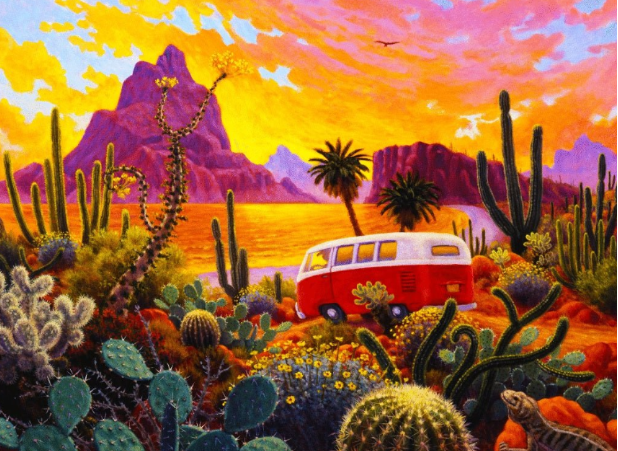
An image of a city square looks easy to recognize until its roofs, windows, and paving stones are scattered across a table. The small features that seemed incidental in the finished picture become clues to where each piece belongs. Travel puzzles use scenes such as streets, landmarks, and landscapes to create that experience. The best place to begin solving depends on what organizes the scene. A recognizable building can anchor a city view, while a shoreline or a mountain ridge can play the same role in a landscape.
Locate The Strongest Feature in The Picture
Study the reference image and choose a feature that remains recognizable in fragments. A building with a distinctive roof, a bridge with repeated arches, or a sharply defined hillside can provide a reliable starting point. Find where that feature sits in the picture and note which colors, textures, and shapes touch it. Those neighboring details help when the obvious pieces are assembled, and the edges of the group remain unfinished. If the puzzle shows several views of a destination, examine how they are separated. Borders and lettering can provide the initial structure for rebuilding smaller sections independently.
Sort By The Physical Details of The Scene
Color sorting works well for bold blocks such as a bright awning, a stretch of water, or a building with a painted facade. In travel puzzles that use many similar colors, look for distinctive surfaces and repeated forms. Cobblestones often form a different pattern from roof tiles, even when both appear gray. Window frames can be sorted by shape or spacing, and vegetation can be grouped by leaf size or by the direction of the light. Keep the groups loose enough to revise as you learn more about the picture. An ambiguous piece can move between trays without slowing the rest of the work.
Use Perspective to Place Repeated Patterns
A row of windows or a line of posts can stretch across many pieces. Look at how the spacing changes in the reference image. Objects may appear smaller or closer together as they recede. A road or building ledge can offer another directional clue. Track these changes to distinguish fragments that share the same color and pattern. When the nearest parts of the scene are assembled, follow one feature into the distance before moving on to the next. Use both lines and piece shapes as confirmation. A piece that nearly matches two places can become obvious once one neighboring connection is in place.
Decide How Much Challenge You Want From The Image
A higher number of pieces often means more sorting and more time at the table. Image composition can matter as much as the number printed on the box. In travel puzzles, a busy marketplace may have many recognizable details, while a large area of blue sky can demand more attention to small changes in shade and cut. Think about the space available for the finished image and for the pieces that remain unplaced. A shared project can be easier to divide when the scene contains distinct regions. A solo project may suit a narrower table if small groups can be assembled on trays.
Consider The Way The Pieces Are Cut
Wooden jigsaws can use irregular cuts and recognizable shaped pieces. An unusual outline can be easy to remember while providing limited evidence about where the printed image belongs. Check that nearby architectural lines, shadows, or textures continue across each seam. If the outside edge is irregular, assembling part of the main subject can be a more productive first move than searching for the entire border. After completing one area, compare it with the full reference to see what it touches. The next cluster can usually be chosen by identifying the strongest connection already available on the table.
Conclusion
The travel-themed collection from Nautilus Puzzles offers a way to compare destination scenes alongside cut style, piece count, and finished size. Choose an image whose landmarks or landscape details you will enjoy examining up close, then give yourself space to build several sections at once. When you connect the sections, look back at the details that led you from one part of the place to the next. Those details often become the most memorable part of the finished scene.









Leave a Reply