


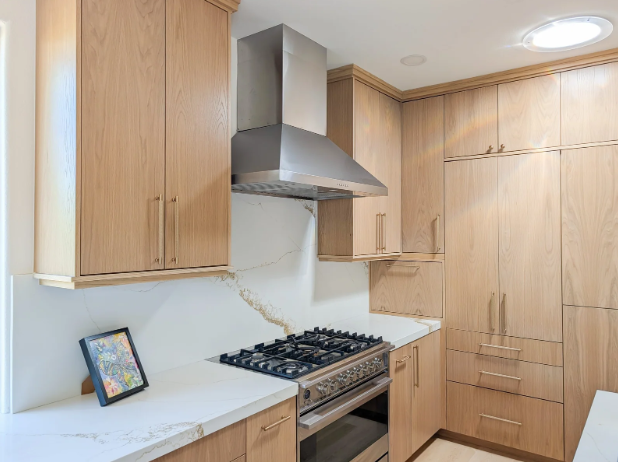
A kitchen fan is one of those hardworking appliances people notice only when it fails to do its job. Lingering odors, greasy cabinets, and hazy air all point to weak or undersized ventilation above the cooktop. Selecting the right wall-mounted range hood vent helps capture smoke at the source and keeps the whole room comfortable. This practical guide covers sizing, airflow, ducted and ductless options, installation height, and everyday care, so your choice works as well as it looks.
Why Wall Mounted Hoods Suit Open Walls and Statement Kitchens
Mounting Directly to the Wall Frees Cabinets and Creates a Focal Point
A wall-mounted hood attaches directly to the wall above the cooktop, so it needs no cabinetry around it. The chimney-style look adds a design focal point, and a wall-mounted range hood vent suits kitchens where the range sits on an exterior or open wall.
Stronger Blower Options Handle Heavy Cooking and Multi-Burner Ranges
Wall hoods are available with blowers from about 550 CFM to well over 1,000, and some outdoor-rated models go higher. That range lets you match airflow to the cooking you actually do. Frequent searing, wok cooking, or grilling benefits from stronger ventilation than occasional weeknight meals.
Finishes and Materials Influence Durability, Style and Everyday Cleaning Effort
Stainless steel dominates because it is durable and easy to wipe clean, though black and white finishes suit specific styles. Higher-grade 304 stainless performs better in humid or outdoor settings. When comparing a wall-mount range hood vent, check material grade, finish options, and how fingerprints or grease show on the surface.
Sizing, Airflow and Duct Choices That Determine Everyday Kitchen Performance
Match the Hood Width to the Cooktop or Go Slightly Wider
Choose a hood that matches the stove width or extends slightly beyond it, since wider coverage captures more rising smoke. Popular sizes include 30 and 36 inches, with larger options up to 60 inches. A properly sized wall-mount range hood vent keeps odors from drifting across the room.
CFM Ratings Should Reflect Your Cooking Style and Burner Output
For regular high-heat cooking, many manufacturers suggest models rated around 900 CFM or more, while lighter use can be served by about 600. Multiple fan speeds help balance power and noise. Remember that the actual performance depends on duct length, bends, and the cap used outside.
Ducted and Ductless Setups Offer Very Different Installation Possibilities and Tradeoffs
Ducted systems vent smoke and moisture outdoors and generally perform best. Ductless setups recirculate air through charcoal filters, which helps where ductwork is impractical. Many shoppers choose a wall-mount range hood vent that can convert between both modes, because it adapts if the kitchen layout changes later.
Installation Height, Maintenance Routines and Long-Term Care Essentials to Remember
Mounting Height Differs Between Electric and Gas Cooktops for Safety
Manufacturers commonly recommend mounting about 24 to 30 inches above electric cooktops and 30 to 36 inches above gas. Following the exact guidance in the manual protects the hood and improves smoke capture. Placing a wall-mount range hood vent too high wastes airflow, while too low a position raises safety and clearance concerns.
Professional Help With Ductwork Makes Installation Smoother, Quieter and Safer
Mounting the hood is manageable for many experienced do-it-yourselfers, but ducted installations may involve cutting through walls or roofs. Use the shortest, straightest duct path possible, since long runs and sharp turns reduce airflow. When in doubt, a licensed professional can ensure proper sealing and local code compliance.
Regular Cleaning and Filter Replacement Maintain Hood Performance and Appearance
Remove and clean metal filters monthly, since many are dishwasher-safe, and wipe the exterior with mild detergent and a soft cloth. Replace charcoal filters in ductless models every three to six months. A well-maintained hood often serves reliably for ten years or more.
Conclusion
A good hood protects both comfort and cabinetry, so it deserves careful research. Compare airflow, material, venting method, and mounting height before you buy, and plan for filter care afterward. For many standard kitchens, a 30-inch wall-mount range hood pairs well with a typical stove while remaining easy to install and maintain. Measure carefully, read the manual closely, and enjoy a fresher, cleaner kitchen.











Leave a Reply